Hemp Seed Tea Benefits for Respiratory and Congestion Relief
Breathing should be effortless, yet millions of people struggle daily with congestion, inflammation, and respiratory
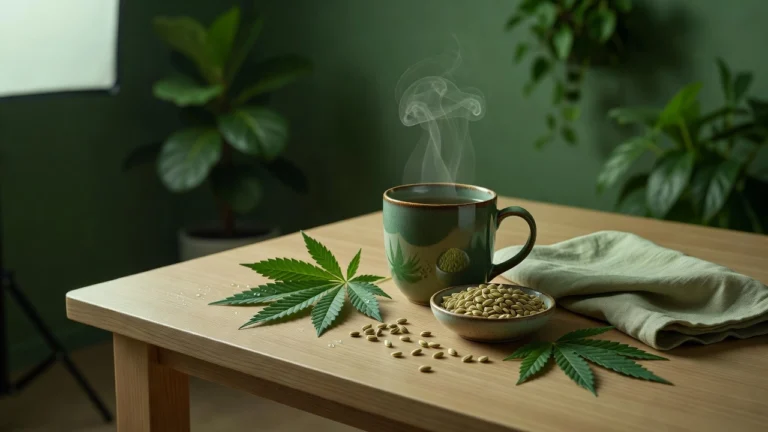
Have you ever wanted to enjoy the calming benefits of hemp in the coziest way possible? Picture yourself wrapping your hands around a warm mug, breathing in earthy, soothing aromas, and simply relaxing. That’s exactly what hemp tea brings to the table.
Hemp tea is quickly becoming a favorite wellness ritual for people looking for a natural way to unwind, and honestly, it’s easier to make than you might think. Whether you’ve heard about it from a friend or stumbled across it while exploring herbal remedies, you’re in the right place to learn everything you need to know.
In this guide, we’ll walk you through what hemp tea actually is, the potential benefits it may offer, and a simple step-by-step process for brewing your very first cup at home. No prior experience needed, no complicated equipment required. Just a few basic ingredients and a little curiosity. By the end, you’ll feel confident enough to start your own hemp tea routine and understand why so many people are adding it to their daily wellness habits. Let’s get started!
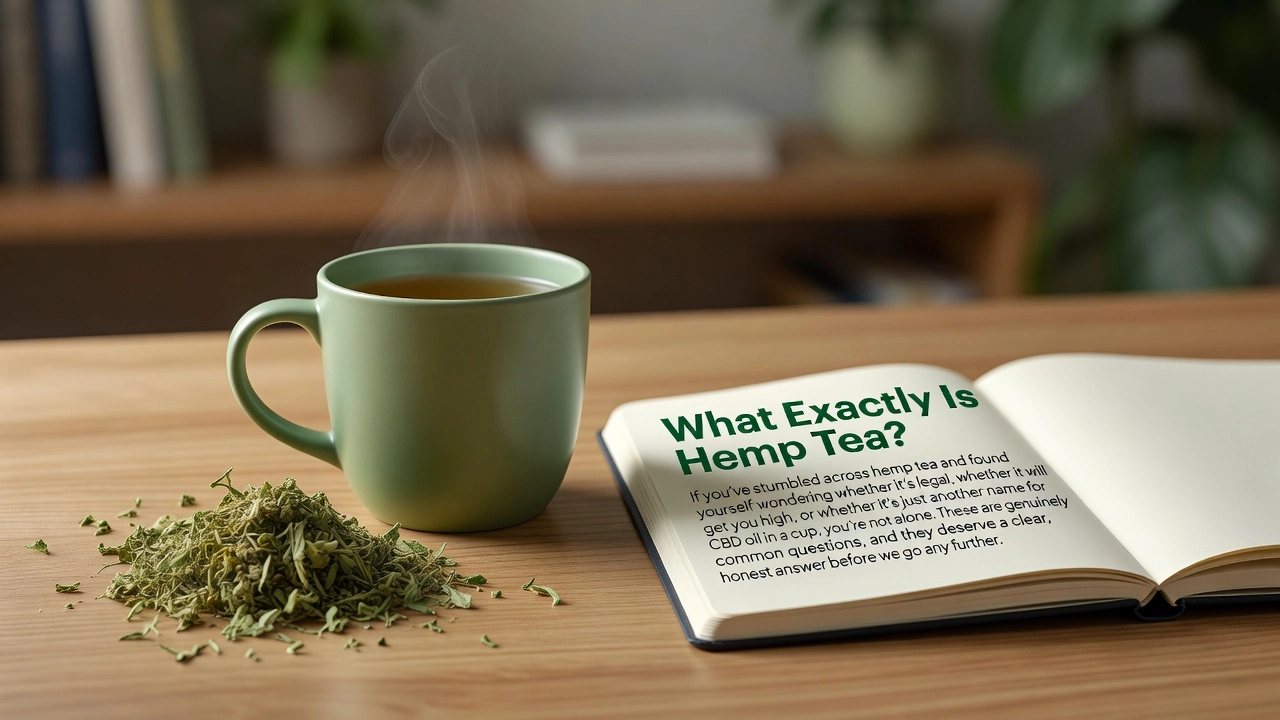
If you’ve stumbled across hemp tea and found yourself wondering whether it’s legal, whether it will get you high, or whether it’s just another name for CBD oil in a cup, you’re not alone. These are genuinely common questions, and they deserve a clear, honest answer before we go any further.
Hemp tea is simply an herbal infusion made by steeping parts of the hemp plant, Cannabis sativa, in hot water. Depending on the product, that could mean the seeds, leaves, or flowers of the plant. Like chamomile or peppermint tea, it’s classified as a tisane rather than a “true” tea, because it doesn’t contain any leaves from the Camellia sinensis plant. It’s naturally caffeine-free, and when made from hemp seed, it has a pleasantly mild, slightly earthy and nutty flavour that works beautifully alongside botanicals like mint, lavender, and rose.
This is where a lot of people get confused, so let’s clear it up straightforwardly. Hemp seed tea and CBD tea are two completely different products. Hemp seed infusions contain no meaningful quantities of CBD or THC, the compounds that give cannabis its psychoactive or therapeutic effects. You will not feel intoxicated, you will not fail a drug test, and you do not need to add milk or oil to help your body absorb anything, because there is simply nothing of that kind to absorb. CBD tea, by contrast, is a distinct and regulated product category that deliberately contains cannabidiol, either through CBD-rich hemp flowers or added CBD extracts. The two sit in entirely separate regulatory and market segments, and it’s important not to confuse them. For a deeper look at how they differ, this guide from Healthline on hemp tea covers the basics clearly.
Absolutely. Hemp seed used in food and drink has long been permitted as a food ingredient in the UK without any Novel Food authorisation requirements. It’s the same regulatory category as hemp seed oil or shelled hemp seeds sold in supermarkets. If you want a thorough breakdown of hemp tea composition and how to choose a blend, this beginner’s guide to hemp tea is a helpful read.
At Leonard’s, our blend uses British-grown hemp seed as its foundation, paired with refreshing mint, fragrant lavender, and delicate rose petals. Using the seed rather than the flower means our tea sits firmly in the flavourful, non-intoxicating, and fully legal herbal infusion category, with absolutely no CBD claims needed or implied. It’s simply a beautiful botanical drink, grown and crafted with care at Rowchester Farm in the Scottish Borders, and it’s as straightforward to enjoy as any other herbal tea in your cupboard.
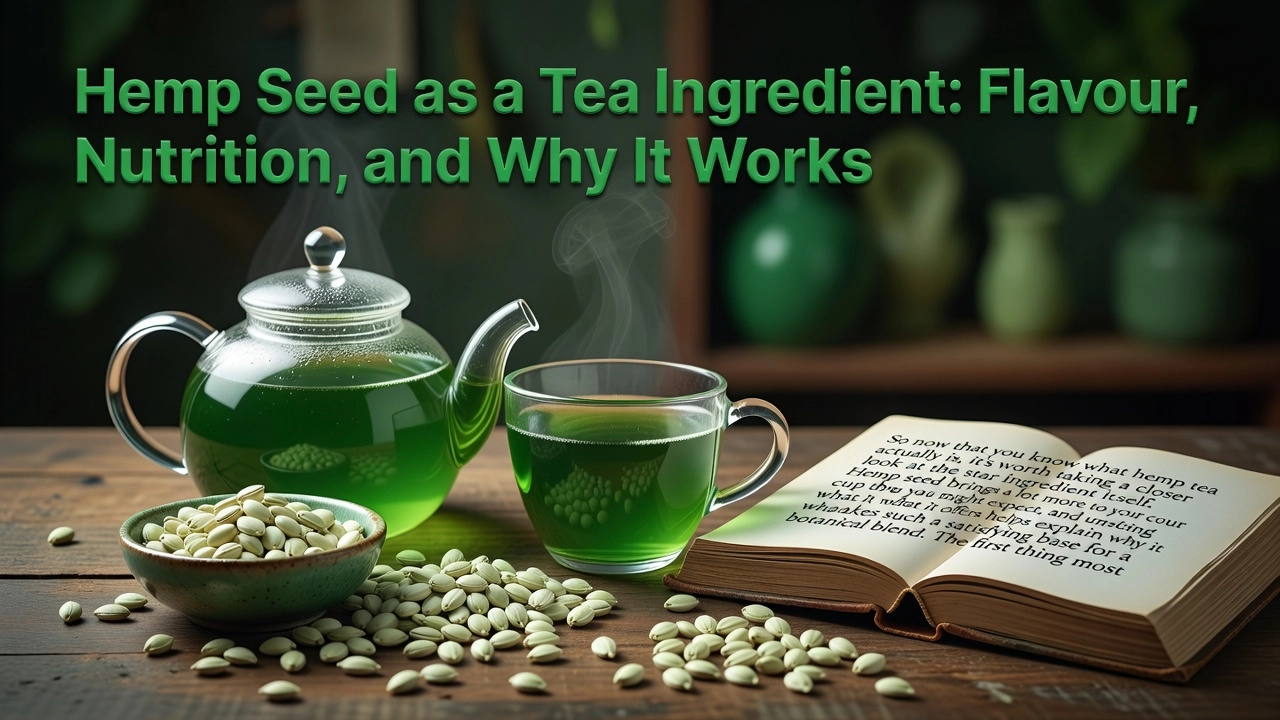
So now that you know what hemp tea actually is, it’s worth taking a closer look at the star ingredient itself. Hemp seed brings a lot more to your cup than you might expect, and understanding what it offers helps explain why it makes such a satisfying base for a botanical blend.
The first thing most people notice about hemp seed in tea is what it doesn’t do. There’s no bitterness, no astringency, and none of that drying sensation you sometimes get from a strong green or black tea. That sharpness in conventional teas comes from tannins and caffeine, and hemp seed contains neither. What you get instead is something much gentler: a mild, walnut-like nuttiness with a soft earthy warmth underneath.
In a cup, this translates to a smooth, rounded flavour that feels easy and approachable. It’s the kind of base note that settles on your palate rather than demanding attention, which turns out to be exactly what you want when you’re blending it with more expressive botanicals. Think of it as the quiet, grounding presence that holds everything else together.
Hemp seed is genuinely impressive from a nutritional standpoint, and research published in Molecules (2024) confirms that interest from the food and wellness industry is growing rapidly. The seeds are a natural source of omega-3 and omega-6 fatty acids, with hemp oil sitting at an omega-6 to omega-3 ratio of approximately 3:1, which is widely considered optimal for human health. They also contain plant-based protein in the form of two highly digestible proteins called edestin and albumin, which the same review describes as offering exceptional nutritional value compared with other plant sources.
On top of that, hemp seeds contain vitamins E, D, and A, plus minerals including magnesium and zinc. These are the kinds of nutrients that support everyday wellbeing, and it’s worth noting that hemp seeds are increasingly valued as a functional food ingredient across a wide range of applications. A quick note here: a tea infusion will naturally extract fewer nutrients than eating the seeds whole, so the nutritional story is most relevant when the seeds are included fully in the blend rather than simply strained away.
Here’s where things get really interesting from a tea-making perspective. Because hemp seed’s flavour is mellow rather than dominant, it functions as an ideal foundation for aromatic ingredients that might otherwise float loose without anything to anchor them. Lavender carries a strong, heady fragrance. Rose petals bring a delicate sweetness. These are beautiful ingredients, but in a blend with nothing underneath, they can feel a little one-dimensional.
Hemp seed solves that problem naturally. Its earthy warmth provides depth and body, giving the floral notes something to rest against. Mint adds a bright, cooling lift to the blend, and the nuttiness of hemp seed sits neatly between mint’s sharpness and rose’s softness, creating a genuinely layered sensory experience. The result is a cup that feels complete rather than thin.
Perhaps the most practical thing about hemp seed as a tea ingredient is that it adds real substance to an infusion without relying on caffeine to do it. Many teas feel satisfying partly because of the stimulant effect they produce, but that also means you can’t always enjoy them freely throughout the day. Hemp seed changes that equation entirely. Because it brings body, mild flavour, and nutritional depth to the cup, a hemp tea genuinely earns its place whether you’re drinking it first thing in the morning, as an afternoon pause, or as part of a winding-down evening routine.
Herbal tea in the UK is no longer a niche habit reserved for health enthusiasts or the occasional chamomile before bed. It has quietly become a mainstream choice for millions of people, and the numbers back that up. The UK herbal tea market was valued at USD 190.85 million in 2024 and is projected to reach USD 310 million by 2035, growing at a steady annual rate of 4.51%. That kind of consistent, decade-long growth tells you something important: this is not a trend that is about to fade. People are genuinely changing how they drink, what they reach for, and why.
The driving forces behind this growth are worth understanding, because they explain exactly why blends like the one crafted at Rowchester Farm make so much sense right now. Consumers are increasingly looking for beverages that are natural, free from artificial additives, and actually offer something beyond just hydration. Health and wellness is the headline driver, but it is closely followed by a demand for sustainable sourcing and genuinely interesting flavour profiles. All three of those motivators sit at the heart of what botanical, farm-grown hemp tea offers.
The audience for herbal tea is broader than you might think, and it keeps growing. One obvious group is evening drinkers, people who want something warming and comforting after dinner without the jolt of caffeine that would keep them awake at 2am. Then there are people who are pregnant or breastfeeding, for whom cutting caffeine is a practical necessity rather than a lifestyle choice. Those managing anxiety are another significant group; when your nervous system is already running hot, the last thing you need is a double espresso at 4pm. And increasingly, there are people who simply want to reduce their overall coffee and caffeine intake as part of a broader shift toward a calmer, more intentional lifestyle.
This last group is larger than many people realise. Research shows that more than one in four UK adults want to reduce their alcohol intake, and a similar moderation mindset is playing out with stimulants too. When people step back from alcohol in the evenings or cut down on coffee during the day, they need something satisfying to replace it. Herbal tea fills that space naturally.
Here is something that is particularly good news if you are curious about hemp tea blends built around lavender, rose, and mint: those ingredients are not just lovely choices, they are confirmed mainstream trends for 2026. Floral and aromatic botanicals have moved firmly from speciality health shops into everyday consumer culture. Lavender, rose, hibiscus, mint, and elderflower are being cited consistently as the flavour profiles shaping the herbal tea category right now. If you have noticed these ingredients appearing more frequently in products across food, drink, and wellness, that is not a coincidence.
This matters because it means a blend combining hemp seed with lavender, mint, and rose petals is not ahead of its time in a way that confuses people. It sits precisely where consumer taste is heading, offering something that feels both familiar and genuinely different.
Understanding where hemp fits within the wider herbal tea landscape helps explain why it represents such an interesting option. Chamomile currently dominates the global herbal tea ingredient segment, holding around 32% of the market. That means the shelves are heavily weighted toward one flavour profile, one set of associations, one well-worn ritual. The remaining 68% is spread across peppermint, ginger, hibiscus, and a long tail of botanicals, but hemp remains largely under-explored as a tea ingredient. That is not a weakness; it is an opportunity. Choosing a hemp-forward blend means choosing something distinctive rather than a variation on a category that already feels crowded.
Perhaps the most important shift in how people relate to herbal tea is not about ingredients at all. It is about what the act of making and drinking tea represents. Consumers are increasingly reaching for functional botanical infusions not simply because they want a particular health benefit, but because they want a moment of calm built into their day. The ritual of boiling the kettle, steeping the leaves, and sitting quietly with a warm cup has real value in a world that rarely slows down. Herbal tea has become a simple, accessible act of self-care, one that does not require a gym membership, a special skill, or a significant investment of time. That is a powerful thing, and it is exactly the kind of everyday moment that a thoughtfully crafted hemp blend is made to be part of.
There’s something worth pausing on before you choose your next herbal tea, and that’s a simple question: do you actually know where the ingredients came from?
For most teas sitting on supermarket shelves, the honest answer is no, and that’s not really your fault. The global botanical tea industry runs on complex international supply chains, where herbs and plant materials pass through multiple hands, multiple countries, and multiple warehouses before they reach your cup. The origin story, if there is one, tends to get lost somewhere along the way.
Leonard’s Herbal Hemp Tea works very differently. Every blend starts at Rowchester Farm in the Scottish Borders, a working British farm where the hemp seed at the heart of the recipe is grown and blended with genuine care. This isn’t a brand story invented by a marketing department; it’s a straightforward description of how the product is actually made. You can trace the journey from field to finished tea because that journey is short, transparent, and rooted in a real place with real people behind it.
This kind of traceability matters more than ever right now. Consumer expectations around food and drink sourcing have shifted significantly, and what once felt like a premium bonus has become a baseline requirement for many buyers. Research from Fairtrade and sustainability analysts confirms that traceability in food and drink supply chains is now treated as a structural expectation rather than a nice extra. Shoppers increasingly want to know where every plant in their blend comes from and how it was grown, not just that the product exists on a shelf with an attractive label.
This is a genuine challenge for large corporate botanical brands. Pukka Herbs, now owned by Unilever since 2017, and Twinings, which operates at enormous global scale, both produce quality products and deserve credit for their distribution reach. But neither can offer what a small Scottish farm can: a single, specific origin story tied to a named piece of British land. Their ingredients are aggregated from international sources, which makes supply-chain transparency genuinely difficult to achieve at that volume. That’s not a criticism so much as a structural reality of operating at scale.
Shorter supply chains have real sustainability benefits that go beyond storytelling. When hemp seed is grown on British soil and blended within the same operation, the food miles involved are a fraction of what you’d find in a globally sourced product. There are fewer intermediaries, less packaging at each stage of transit, and a direct relationship between the person growing the ingredients and the person drinking the tea. That kind of connection is genuinely rare in the modern food industry, and the UK herbal tea market, currently valued at around USD 190 million and growing steadily, is increasingly rewarding producers who can demonstrate it.
Perhaps the most compelling aspect of Leonard’s blend is just how unusual British-grown hemp seed actually is as a tea ingredient. The UK currently has only around 900 hectares under hemp cultivation, a remarkably small amount for a country of this size, though that figure is projected to grow to over 3,500 hectares by 2030 as domestic interest accelerates. What this means in practice is that most hemp ingredients used in UK food and drink products right now are imported, not home-grown. A tea using seed cultivated on British soil isn’t a regional twist on a familiar product; it’s genuinely different from almost everything else in the category.
That novelty matters for anyone who takes their botanical teas seriously. When you choose Leonard’s, you’re not simply picking another herbal blend from a crowded shelf. You’re choosing something grown in the Scottish Borders, tended by people who care about the outcome, and blended with ingredients whose entire journey you can actually follow. In a market where most origin stories are vague at best, that’s a difference worth appreciating.
Brewing hemp tea well is less complicated than you might think, but a few small choices make a real difference to what ends up in your cup. Getting the basics right means you’ll taste everything the blend has to offer, from the fresh lift of mint to the soft, earthy warmth of hemp seed and the gentle floral character of lavender and rose.
The single most important thing you can do is resist the urge to pour straight from a rolling boil. Boiling water sits at 100°C, and while that’s fine for a robust black tea, it’s a little too aggressive for a blend that contains delicate botanical ingredients. The fragrant essential oils in lavender and rose are genuinely heat-sensitive; blast them with boiling water and those soft, floral notes can fade before you’ve even taken a sip. Aim instead for somewhere between 90 and 95°C. If you don’t have a temperature-controlled kettle, simply boil your water and leave it to sit for a minute or two before pouring. It’s a tiny adjustment that protects the aroma and keeps the flavour profile balanced and true to the blend.
Once your water is at the right temperature, steeping time becomes your main tool for shaping the flavour. A steep of around 4 to 5 minutes gives you a well-rounded, balanced infusion where the hemp, mint, lavender, and rose all have a chance to come through clearly. If you pull the infuser out closer to the 3-minute mark, the mint will be noticeably brighter and fresher in character; the cup feels lighter and more invigorating. Leave it for closer to 6 or 7 minutes and the earthier, nuttier quality of the hemp seed becomes more prominent, which many people find grounding and satisfying, particularly in the evening. Neither approach is wrong; it simply depends on what you’re in the mood for. Start at 4 to 5 minutes and adjust from there once you’ve had a chance to taste what you enjoy most.
For loose-leaf hemp tea, a tea infuser or fine-mesh strainer is all you need. One important detail: choose an infuser with a bit of room inside rather than a tight ball-style infuser. Botanicals like lavender, rose petals, and hemp seed are fairly voluminous, and they need space to fully expand as they steep. When the ingredients can’t open up properly, the water doesn’t circulate through them evenly and you lose complexity in the cup. A heaped teaspoon per 8-ounce cup is a reliable starting measure, though you can add a little more if you prefer a stronger brew. This is one of the genuine advantages of loose-leaf formats; as explained in this guide to brewing loose-leaf tea properly, the botanicals can fully open and release their essential oils in a way that a compact tea bag simply doesn’t allow for. More surface contact, better flavour, and noticeably more aroma.
Once you’re comfortable with the standard brew, it’s worth experimenting. For a cold serve, brew your hemp tea as normal, allow it to cool, then pour it over ice with a slice of lemon. The citrus lifts the mint and rose beautifully and makes for a genuinely refreshing cold drink, especially in summer. If you prefer something a little warmer and sweeter, try adding a small spoonful of honey while the tea is still hot. Honey has a mild, rounded sweetness that works with the floral notes in the blend rather than overpowering them; avoid heavily flavoured honeys and reach for something delicate like acacia or a light wildflower variety.
Perhaps the most underrated part of brewing hemp tea is the process itself. There’s something quietly satisfying about measuring your loose-leaf blend, warming your cup, watching the botanicals unfurl as the hot water rises around them, and inhaling that first wave of lavender, mint, and hemp as the steam curls upward. It takes maybe five minutes from start to finish, but approached with a little intention, it genuinely becomes a small pause in the day rather than just a functional task. In a world that tends to move quickly, the act of brewing tea slowly and attentively is its own kind of reward.
There is a particular kind of gift that feels genuinely thoughtful rather than obligatory, and artisan botanical tea sits firmly in that category. It is personal without making assumptions about someone’s tastes, practical because it gets used and enjoyed, and it carries a story behind it that no supermarket shelf product can replicate. When you hand someone a blend that has been grown, harvested, and crafted with real care, you are giving them something with meaning woven into every ingredient.
The good news is that botanical tea translates beautifully across the gifting calendar. A Leonard’s blend nestled inside a Christmas hamper alongside some locally made shortbread feels completely at home. For Mother’s Day, a wellness-focused tea speaks directly to the theme of rest, calm, and being looked after. Wellness-themed birthdays are another natural fit, especially for friends and family who are already interested in natural health and herbal ingredients. And for host thank-you gifts, a beautifully presented botanical tea is exactly the kind of thing people appreciate but rarely buy for themselves.
The details matter enormously when it comes to perceived quality, and Leonard’s ticks every box. Named-farm provenance is one of the most powerful trust signals a product can carry; knowing that your tea comes from Rowchester Farm in the Scottish Borders is far more meaningful than a vague “natural ingredients” claim on a box. The combination of British-grown hemp seed with mint, lavender, and rose petals is distinctive enough to feel special rather than generic. Honest labelling with no artificial additives tells the recipient that someone has genuinely thought about what goes into the cup. These are not just quality signals; transparent labelling is also a legal expectation in the UK market, which means honest producers like Leonard’s are doing things properly from the ground up.
One of the most underappreciated qualities of hemp tea as a gift is how widely it can be enjoyed. Because it is naturally caffeine-free, it suits a remarkably broad range of recipients, including those who have cut back on caffeine, people who prefer something gentle in the evenings, or older relatives who find caffeinated drinks disruptive. It is worth noting that anyone who is pregnant should check with their healthcare provider before consuming hemp products, as with any herbal supplement. That caveat aside, caffeine-free wellness tea is one of the most inclusive gifting choices available in the drinks category today.
The simplest way to elevate a pack of Leonard’s into something truly memorable is to pair it with a handwritten card telling the story behind the farm. A few lines about Rowchester Farm, about a family business that genuinely cares about what grows in its fields, and about a tea made without shortcuts or artificial ingredients will do more to connect the recipient to the gift than any fancy packaging ever could. That human layer, the sense that someone chose this deliberately and took a moment to explain why, is exactly what separates a thoughtful present from a forgettable one.
Not all hemp teas are created equal, and once you know what to look for, the difference between a quality blend and a disappointing one becomes much easier to spot. A few simple checks before you buy can save you from a flat, flavourless cup and point you toward something genuinely worth drinking.
The ingredients list is the most honest thing on any tea packet. A quality hemp tea should read like a list of things you’d find in a herb garden, not a chemistry textbook. Look for recognisable botanicals listed clearly by name: hemp seed, mint, lavender, rose petals, and so on. If you see artificial flavourings, unspecified “natural flavouring compounds,” or fillers you can’t identify, that’s a practical warning sign. The clean-label principle in herbal tea manufacturing centres on exactly this: transparency, ingredient simplicity, and the absence of anything artificial. Short, legible, botanical-only ingredients lists are a baseline marker of quality, and they’re worth treating as non-negotiable.
Origin transparency matters more than most people realise. Hemp is a crop that absorbs what’s in its environment, so the soil it’s grown in, the climate it’s raised under, and the farming practices used all shape what ends up in your cup. A producer who can trace their hemp to a specific farm or named region is offering something meaningfully more reliable than vague phrases like “responsibly sourced.” Ask yourself: does the producer tell you where the hemp was grown? Do they mention sustainability practices or farming methods? These aren’t luxury details; they’re genuine quality signals that are increasingly expected rather than exceptional.
Production scale has a direct effect on what you taste. Mass-produced teabag blends are typically processed at industrial volumes, blended for shelf longevity, and often lack the aromatic freshness you get from carefully handled botanicals. According to research on why small-batch and handcrafted production matters, smaller production runs mean products don’t sit in warehouses for months before reaching you, and each batch can be individually checked for quality. The result, in practice, is a more vibrant, aromatic cup. Craft-packaged or loose-leaf blends from smaller producers tend to preserve the character of their botanicals far better than high-volume automated processing allows.
Leonard’s Herbal Hemp Tea reflects all of the above in a straightforward way. The blend uses British-grown hemp seed with fully traceable domestic provenance, combined with hand-selected botanicals: mint, lavender, and rose petals. There are no artificial additives and no fillers, just a short, honest ingredients list of recognisable plants. Production takes place in small batches at Rowchester Farm in the Scottish Borders, which means the botanicals are handled with care at every stage and the freshness you’d expect from a craft product is genuinely preserved. It’s the kind of tea where the origin story and the ingredients list tell the same story.
If you’ve weighed up these criteria and care about knowing exactly what’s in your cup and where it came from, Leonard’s blend is a natural place to start.
If you’re new to hemp tea, it’s natural to have a few questions before you brew your first cup. Here are the answers to the ones that come up most often.
Yes, absolutely. Hemp seed used as a food and drink ingredient has a long history of safe use in the UK and is fully legal under UK food regulations. It’s worth knowing that hemp seed products sit in a different regulatory category from CBD extracts, which are classified as Novel Foods by the Food Standards Agency and face separate rules. When you’re drinking a hemp seed tea, you’re simply enjoying a botanical herbal infusion, not a CBD supplement. Leonard’s blend is made using British-grown hemp seed, so you can sip with complete confidence.
Hemp seed tea contains only negligible levels of cannabinoids. The hemp plant naturally produces very low levels of THC, typically 0.03% or less, and hemp seed itself contains even less. At these trace levels, there is absolutely no psychoactive effect whatsoever. If you’d like to read more about how hemp tea differs from CBD products, The Beginner’s Guide to Hemp Tea offers a clear breakdown. In short, drinking hemp seed tea is nothing like consuming a CBD oil or medical cannabis product.
Yes, hemp seed is naturally free from caffeine. This makes hemp tea a genuinely versatile drink that works just as well in the evening as it does first thing in the morning. If you’re sensitive to caffeine or simply looking to reduce your intake without giving up the ritual of a warm, comforting cup, a hemp-based herbal infusion is an excellent choice.
On its own, hemp seed has a smooth, mildly nutty character with gentle earthy undertones. It’s a soft, approachable base rather than anything sharp or overpowering. When blended with mint, lavender, and rose petals, as in Leonard’s signature blend, those earthy notes are lifted into something noticeably more floral and layered. The mint brings a clean freshness, the lavender adds a delicate fragrance, and the rose petals contribute a light, subtle sweetness. The overall result is a rounded, aromatic infusion that feels calm and considered rather than busy.
Yes, hemp seed tea is a gentle herbal drink that suits daily consumption well. Because it contains no caffeine, it won’t disrupt sleep or leave you feeling jittery. Many people find it becomes a natural part of their daily routine, whether as a morning ritual, an afternoon pause, or a way to wind down in the evening. As with any herbal drink, if you are pregnant, breastfeeding, or taking regular medication, it’s always sensible to check with a healthcare professional first. For most healthy adults, though, a daily cup is a simple, enjoyable habit. You can find further helpful context on what hemp tea is and how to choose one if you want to explore further before committing to a blend.
Hemp tea is legal, caffeine-free, genuinely nutritious, and far more interesting in flavour than most people expect. It sits in a different sensory space from the soft, predictable chamomile blends that dominate supermarket shelves, offering something earthier, more botanical, and more layered. If this guide has done one thing, hopefully it has made that feel a little less unfamiliar.
The practical steps are straightforward. Brew at around 90°C for 4 to 5 minutes, which lets the botanicals open up without turning bitter. If you want a richer aroma and a more nuanced cup, a loose-leaf format is worth exploring. And if you are looking for a gift that feels considered rather than generic, a quality botanical hemp blend is one of those rare choices that suits almost anyone.
At Leonard’s, we believe great tea starts with great ingredients, and knowing where those ingredients come from makes every cup feel a little more satisfying. Our blend of British-grown hemp seed, mint, lavender, and rose petals is crafted at Rowchester Farm in the Scottish Borders, where every batch reflects a genuine care for natural flavour and honest provenance.
If you are curious to try it, explore Leonard’s Herbal Hemp Tea and discover a blend rooted in real ingredients, real farming, and a love of botanical tea done simply and well.
Hemp tea is more than just a warm drink; it’s a simple, natural ritual that can support relaxation, wellness, and daily balance. To recap the key takeaways: hemp tea is derived from the hemp plant and contains beneficial compounds like CBD, it offers potential calming and anti-inflammatory benefits, and brewing it at home requires nothing more than a few accessible ingredients and basic steps.
The best part? You don’t need to be an herbal expert to enjoy it. Anyone can start today.
So go ahead, pick up some quality hemp leaves or a pre-made blend, follow the brewing steps outlined in this guide, and pour yourself a well-deserved cup. Your body and mind will thank you. Small wellness habits create lasting change, and your hemp tea journey starts with a single sip.
Breathing should be effortless, yet millions of people struggle daily with congestion, inflammation, and respiratory
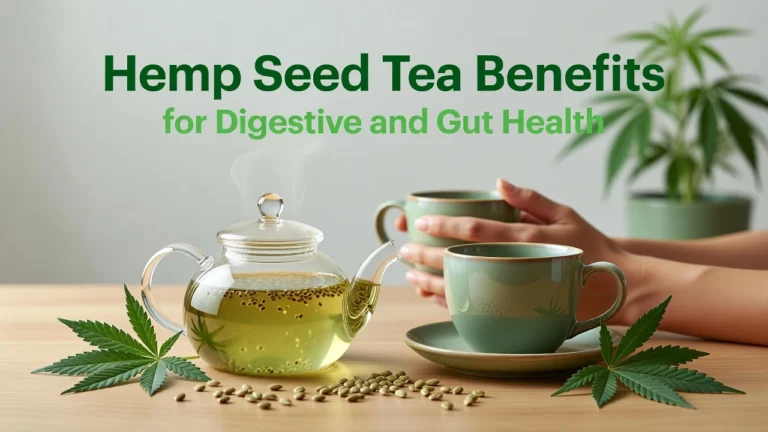
Have you ever felt bloated, sluggish, or just plain uncomfortable after a meal? You are