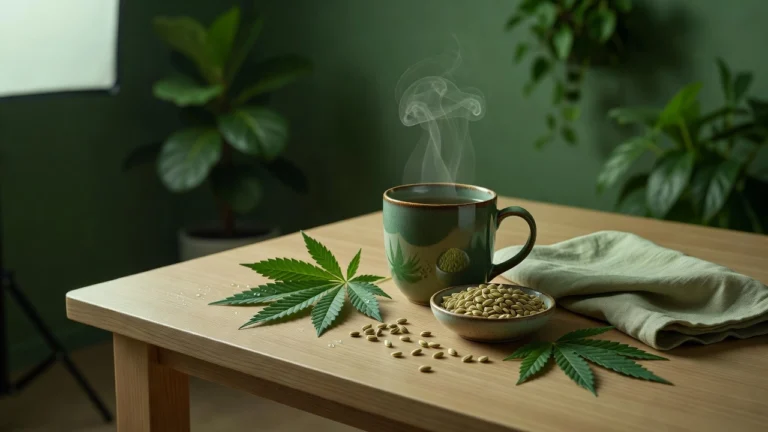
Hemp Seed Tea Benefits for Respiratory and Congestion Relief
Breathing should be effortless, yet millions of people struggle daily with congestion, inflammation, and respiratory
Picture this: it’s late evening, you’re winding down after a long day, and you want something warm and soothing to sip on. But coffee? Absolutely not. The last thing you need is another jolt of caffeine keeping you staring at the ceiling at midnight. This is exactly where caffeine free herbal tea becomes your new best friend.
Whether you’re trying to cut back on caffeine, looking for a gentle way to relax, or simply curious about expanding your tea collection, herbal teas offer a wonderful world of flavors and benefits worth exploring. But here’s the thing: not all herbal teas are created equal. Some are bold and earthy, others are light and floral, and a few are downright magical for helping you unwind.
In this post, we’re breaking down exactly what makes a great caffeine free herbal tea worth your time and money. From ingredients and flavor profiles to health benefits and brewing tips, you’ll walk away knowing precisely what to look for the next time you’re browsing the tea aisle. Let’s get into it!
If you’ve ever reached for a “decaf” tea thinking it was the same as a herbal infusion, you’re not alone. It’s one of the most common points of confusion in the tea aisle, and the difference is actually really important.
Let’s start with the basics. Standard teas, including black, green, and white varieties, all come from the same plant: Camellia sinensis. This plant naturally produces caffeine, full stop. Decaffeinated teas are simply Camellia sinensis leaves that have been processed to remove most of that caffeine, using methods like solvent-based extraction (sometimes involving chemicals such as methylene chloride or ethyl acetate) or CO2 pressure extraction. Even after processing, small traces of caffeine can remain, which matters if you’re particularly sensitive or avoiding caffeine for health reasons.
Herbal infusions, on the other hand, are technically called tisanes. They are made entirely from plants that never belonged to the Camellia sinensis family and never contained caffeine in the first place. Ingredients like mint, lavender, rose petals, and hemp seed are naturally caffeine-free by biology, not by processing. No chemicals, no extraction steps, no industrial intervention required. Understanding this distinction is genuinely useful when you’re choosing what to drink.
This is why “naturally caffeine free” is a stronger claim than “decaffeinated.” Decaffeinated means something caffeinated was treated to become less so. Naturally caffeine free means the question never arose.
Here at Leonard’s, our hemp seed, mint, lavender, and rose petal blend is a true tisane, crafted from botanicals that are caffeine-free from the ground up. No processing steps, no caveats, just honest, clean ingredients grown and blended with care on our farm in the Scottish Borders.
There are quite a few reasons people are choosing to reduce their caffeine intake, and honestly, it goes well beyond just wanting a better night’s sleep. Here are the main ones we hear about most often.
Most people know that a strong coffee at 10pm is a bad idea. What surprises many is how much earlier caffeine can start causing problems. Research suggests that consuming caffeine within six hours of bedtime is enough to interfere with your sleep quality, making it harder to fall asleep and more likely you’ll wake during the night. That afternoon cup of tea or coffee at 3pm? It could still be active in your system well into the evening. Swapping it for a naturally caffeine-free herbal infusion is one of the simplest, most immediate changes you can make to support better rest.
Caffeine is a central nervous system stimulant, and for people who are sensitive to it, even moderate amounts can leave them feeling jittery, tense, or on edge. A 2025 narrative review published in the journal Cureus confirmed that mood disruption and anxiety are among the recognised psychological effects of caffeine use, particularly in those who already experience stress. Many people who cut back report feeling noticeably calmer after just a couple of weeks. Reaching for a soothing herbal blend instead of your usual brew can make a real difference to how you feel throughout the day.
If you’re pregnant or breastfeeding, you’ll likely already be aware that caffeine is something to keep an eye on. The NHS recommends keeping caffeine intake below 200mg per day during pregnancy, and many mums-to-be find it easier to simply swap caffeinated drinks for naturally caffeine-free alternatives rather than count milligrams. A gentle herbal infusion made with botanicals like mint, lavender, and rose petals offers a reassuring choice, though it’s always worth checking with your midwife before introducing any new herbal blend during pregnancy.
Health-conscious consumers, particularly younger adults and those with an active lifestyle, are taking a more holistic look at everything they consume. According to Healthline, reducing caffeine intake can support lower blood pressure, improved digestion, and more balanced energy levels throughout the day, benefits that sit naturally alongside a broader commitment to wellbeing.
This shift is reflected in the numbers, too. The global caffeine-free and decaf tea category is growing at a CAGR of 6.4%, with the market projected to reach USD 4.9 billion by 2034. This is clearly mainstream demand, not just a passing trend for a niche audience.
Now that we’ve explored why so many people are switching to caffeine free herbal tea, it’s worth taking a closer look at what actually goes into a thoughtfully crafted blend. At Leonard’s, our signature infusion brings together three botanicals that each have a long and respected history in herbal traditions: mint, lavender, and rose petals. Here’s what makes each one special.
Mint is one of those ingredients that almost everyone recognises instantly, and that’s a big part of its appeal. That bright, cooling sensation comes from naturally occurring menthol, which gives mint its characteristic freshness. Beyond the flavour, mint has a long association with digestive comfort in herbal traditions, and peppermint in particular has been widely studied for its soothing properties. It’s no surprise that it’s become one of the most widely enjoyed ingredients in herbal tea bags and caffeine-free blends. In a blend, mint also does something really useful: it lifts and brightens the other botanicals around it, stopping the cup from feeling too heavy or overly floral.
Lavender has been used in aromatherapy and herbal traditions for centuries, and its reputation for promoting calm and relaxation is well-established. In a tea blend, it adds a delicate, slightly sweet floral note that instantly makes a brew feel like more of a ritual than just a drink. Steep a cup in the evening and you’ll understand why so many people have made it part of their wind-down routine. It’s gentle rather than overpowering, especially when balanced with the brightness of mint. A simple lavender and mint combination produces a naturally flavourful, caffeine-free infusion that needs no artificial sweeteners whatsoever.
Rose petals bring a soft, naturally sweet quality that rounds out a blend beautifully. They’ve been used in botanical remedies for centuries, appearing in European herbal medicine and Middle Eastern wellness traditions long before they found their way into tea. They also carry antioxidant properties; herbal blends containing flowers like rose petals are noted for containing compounds that support general wellbeing. Flavour-wise, rose adds a mild complexity that sits just behind the mint and lavender, giving the cup a little more depth without taking over.
The real magic happens when all three come together. Mint provides the cooling lift, lavender brings the floral calm, and rose petals add that gentle sweetness. The result is a cup that feels balanced and smooth, with a natural sweetness that means there’s absolutely no need for artificial additives or sweeteners. All three ingredients are clean-label and instantly recognisable, which matters a great deal to today’s tea drinkers who want honest, simple formulations with nothing hidden in the small print. At Leonard’s, that straightforward approach sits at the heart of everything we make.
Let’s address the elephant in the room straight away. When people first spot hemp seed on the ingredients list, there’s often a moment of hesitation. Completely understandable. But here’s the reassuring truth: hemp seed is not CBD, it contains no meaningful THC, and it will not produce any psychoactive effect whatsoever. The seed is a food ingredient, plain and simple, and it has been for a very long time.
Hemp seed comes from the Cannabis sativa plant, yes, but it is botanically and legally treated as an entirely separate thing from cannabis extracts or CBD products. CBD is derived from the leaves and flowers of the plant, not the seed itself. The seed contains negligible levels of THC (the compound responsible for psychoactive effects), which is why food regulators treat it so differently. In the UK, hemp seed is a fully approved food ingredient, used widely in everything from bread and granola to protein powders and energy bars. It sits in your supermarket in plain sight, often right next to the quinoa and chia seeds. You can read more about the broader nutritional case for hemp seed as a food ingredient in this peer-reviewed review of hemp seeds as functional food ingredients.
Beyond the reassurance, hemp seed genuinely earns its place in a tea blend on flavour alone. It brings a subtly nutty, smooth, and earthy base note to the infusion, which does something quite lovely to the overall experience. Mint can be bright and a little sharp on its own. Lavender and rose are delicate and floral. Hemp seed acts as the grounding element that ties everything together, softening the edges and creating a cup that feels rounded and satisfying rather than one-dimensional.
Hemp seed is also quietly impressive on the nutrition front. It is naturally rich in plant-based protein, omega-3 and omega-6 fatty acids, and essential minerals including magnesium, iron, and zinc. The omega-6 to omega-3 ratio sits at approximately 3:1, which nutritionists consider a notably favourable balance for a plant-based source. So while you are enjoying a calming, caffeine free herbal tea, there is a little extra goodness quietly doing its thing in the background.
At Leonard’s, the hemp seed in our blend is British-grown, right here on Rowchester Farm in the Scottish Borders. That is not just a nice story; it is a deliberate decision. Growing our own hemp seed means we know exactly where it comes from, how it is cultivated, and that it meets the honest, natural standards we hold for every ingredient in the cup. It connects the flavour to the land, and that connection matters to us deeply.
When you pick up a herbal tea, have you ever wondered where those ingredients actually came from? For a growing number of UK shoppers, that question really matters. Provenance, which simply means knowing the origin of what you’re eating or drinking, is becoming one of the most important factors in how people choose their food and drink. Knowing exactly where an ingredient was grown, by whom, and under what conditions gives you a level of transparency that mass-produced, globally sourced products simply cannot offer. According to UK herbal tea market research, sustainable and ethical sourcing with transparent supply chains is now one of the top trends shaping what British consumers choose to buy.
When botanicals are grown domestically rather than shipped halfway across the world, the benefits stack up quickly. Shorter supply chains mean fresher ingredients that haven’t spent weeks in transit, a smaller carbon footprint, and far fewer food miles attached to every cup you brew. This isn’t just good marketing language; it’s a genuine, measurable difference in both quality and environmental impact. The UK tea market is projected to nearly double by 2034, and a big part of that growth is being driven by consumers who want premium products with honest, verifiable sustainability credentials behind them.
This is exactly where Leonard’s Herbal Hemp Tea stands apart. At Rowchester Farm in the Scottish Borders, the hemp seed used in every blend is grown right there on the family’s own land. There’s no mystery about the supply chain because there essentially isn’t one. The farm, the botanicals, the blending, and the finished cup are all part of the same carefully tended story. That kind of farm-to-cup traceability is something the big, internationally sourced brands simply cannot replicate, and it resonates deeply with people who want their tea to mean something.
The growing appreciation for British herbal and green teas reflects a broader cultural shift toward local, seasonal, and artisanal food products. People are actively moving away from anonymous, mass-produced alternatives in favour of things made with craft and care. In the gifting market especially, the story behind a product carries real weight. A named farm, a specific Scottish valley, a family who genuinely knows every ingredient they use; these details transform a simple box of tea into something thoughtful and personal, which is exactly why British provenance has become such a meaningful differentiator in the premium herbal tea space.
One of the great things about caffeine free herbal tea is how easily it fits around your day. Unlike coffee or standard black tea, which tend to anchor themselves firmly to the morning, a good herbal blend genuinely works at different moments. Here are four occasions where Leonard’s botanical blend really comes into its own.
If you are gradually cutting back on caffeine, swapping your first morning drink for something like a mint-forward herbal tea is a really manageable first step. Your body’s natural cortisol levels rise in the morning to help you feel alert, which means you do not necessarily need a stimulant to get going. A bright, refreshing mint blend delivers that sense of freshness and sensory engagement without the spike and crash that can follow a strong coffee. It is a small change that many people barely notice at first, but one that makes a real difference over time.
Mint has a long tradition as a post-meal herb, with good reason. Drinking a cup around 20 to 30 minutes after eating is widely recognised as a way to support comfortable digestion and ease that familiar afternoon heaviness. Crucially, choosing caffeine free here means you are not adding more stimulants into an afternoon that might already feel sluggish.
According to Verywell, the evening is the single best time for a caffeine-free herbal tea, and it is easy to see why. The lavender and rose petals in Leonard’s blend are particularly well suited to a pre-bed ritual. The warmth, the aroma, and the simple act of sitting quietly with a cup all help signal to the body that it is time to slow down. For more on choosing the right tea for different times of day, it is worth reading around the topic.
A beautifully presented botanical tea from a working British farm is a genuinely considered gift. Whether it is a birthday, a thank-you, or something seasonal, Leonard’s blend offers something far more personal than a generic option, with a real story behind every cup.
With so many herbal teas on the shelves, knowing what to look for can make all the difference. Here are five simple things to keep in mind when choosing a caffeine free herbal tea you will genuinely love.
1. Check it is truly naturally caffeine free Not all caffeine-free teas are created equal. Some are made from Camellia sinensis (standard tea leaves) and then processed to strip out the caffeine. A genuinely caffeine-free herbal tea contains no Camellia sinensis at all. It is made entirely from botanicals, flowers, herbs, and seeds that never contained caffeine in the first place. Always glance at the ingredients and watch out for additions like yerba mate or guarana, which are herbal but do actually contain caffeine.
2. Read the ingredients list carefully A quality herbal tea should read like something you could find in a kitchen garden. Short, recognisable, real. If the list is peppered with artificial flavourings, preservatives, or vague terms like “natural flavouring,” that is worth questioning. This handy caffeine-free tea checklist is a great starting point for knowing what to look out for.
3. Look for provenance and traceability Brands that can tell you where their ingredients come from tend to care more about what goes into the blend. Farm details, growing regions, and sourcing information are all positive signs of a thoughtful producer.
4. Consider sustainability Packaging materials, farming methods, and supply chain choices all reflect a brand’s values. Look for natural, low-waste packaging and producers who take their environmental responsibilities seriously.
5. Trust your palate Ultimately, the best herbal tea is the one you actually want to drink. Flavour, aroma, and how the brew makes you feel all matter. A beautiful label means very little if the tea sits untouched in your cupboard.
By now, you have everything you need to make a genuinely informed choice. Naturally caffeine-free herbal tea is not simply a caffeine-free version of regular tea; it is a completely different thing altogether, made from botanicals that never contained caffeine in the first place. That distinction matters, and so do the ingredients inside the blend.
Mint brings that clean, refreshing brightness. Lavender adds a sense of calm that feels almost like a gentle exhale. Rose petals offer delicate sweetness and a softness that rounds the whole cup beautifully. And hemp seed, the quiet hero of the blend, provides a smooth, nourishing base that ties everything together.
If you are curious to try something made with real care, Leonard’s hemp seed herbal blend is a lovely place to start. Crafted in small batches on a family farm in the Scottish Borders, it uses no artificial additives, just honest botanicals grown and selected with intention. It is the kind of tea you can feel good about drinking every day.
Pop over to the Leonard’s shop to explore the blend for yourself, or consider it as a gift for someone who deserves something a little more thoughtful than the usual.
Finding the perfect caffeine free herbal tea does not have to feel overwhelming. The best blends combine quality ingredients, balanced flavor profiles, and real wellness benefits that support your lifestyle. Brewing technique matters too; even the finest tea can fall flat without the right water temperature and steeping time.
Here is what to remember: prioritize natural, recognizable ingredients, choose flavors that genuinely appeal to you, and pay attention to how each blend makes you feel. Your evening ritual deserves something truly special.
Ready to start exploring? Head to your local tea shop or browse a trusted online retailer and pick up two or three new herbal varieties this week. Experiment, take notes, and discover what works best for you. The perfect cup of calming, caffeine free goodness is out there waiting. Go find it.
Breathing should be effortless, yet millions of people struggle daily with congestion, inflammation, and respiratory

Have you ever felt bloated, sluggish, or just plain uncomfortable after a meal? You are