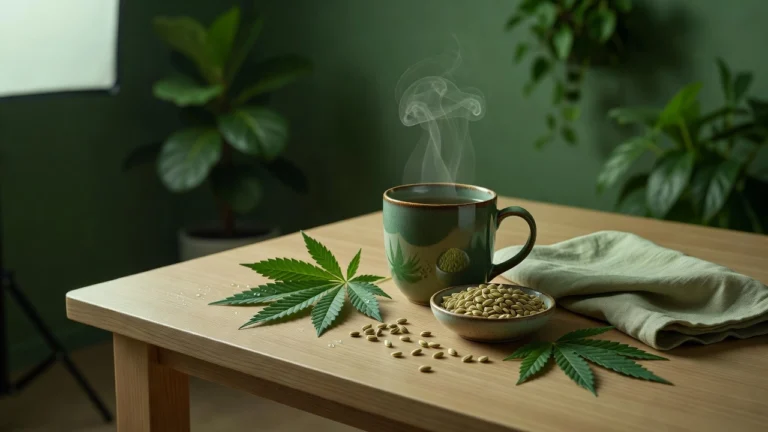
Hemp Seed Tea Benefits for Respiratory and Congestion Relief
Breathing should be effortless, yet millions of people struggle daily with congestion, inflammation, and respiratory
Have you ever wrapped your hands around a warm mug of herbal hemp tea and wondered what exactly you were sipping on? You are not alone! More and more people are reaching for this earthy, soothing brew, and for good reason.
Here is something that might surprise you: herbal hemp tea is a source of nutrients that many of us simply are not getting enough of in our daily diets. We are talking about vitamins, minerals, and other beneficial compounds that your body genuinely loves. Pretty cool for something that just looks like a simple cup of tea, right?
But with so many wellness drinks out there making big promises, it is totally fair to ask what is actually inside your cup. That is exactly what we are going to break down for you today. No complicated science, no confusing jargon, just a straightforward, beginner-friendly list of the key nutrients found in herbal hemp tea and why they matter for your health. By the end of this post, you will know exactly what you are drinking and why it might be worth making a regular part of your routine.
When you steep Leonard’s Herbal Hemp Tea, the British-grown hemp seeds in the blend do something quietly impressive. As they sit in hot water, they release trace amounts of two essential fatty acids: alpha-linolenic acid (ALA), which is an Omega-3, and linoleic acid (LA), which is an Omega-6. These are not compounds the human body can make on its own, so they have to come from what you eat and drink. That makes every cup a small but genuine contribution to your daily intake.
Both fatty acids are well-researched in terms of what they do in the body. Omega-3 and Omega-6 are associated with brain health, cardiovascular function and the regulation of inflammation, and a peer-reviewed study published in Nutrition and Metabolism confirmed that hemp seed’s fatty acid profile has measurable effects on cardiovascular markers. Hemp seed naturally delivers these two fatty acids in a roughly 3:1 ratio of Omega-6 to Omega-3, which is considered a well-balanced proportion for everyday dietary support.
It is worth being straightforward here. A brewed infusion delivers a trace contribution, not a supplement dose. Hot water extracts only a fraction of what sits in the whole seed, so this is a gentle, complementary benefit rather than a concentrated source. That honest simplicity is very much in keeping with how Leonard’s approaches their blend.
Beyond the fatty acids, steeping hemp seed also releases soluble amino acids into the water. These are the building blocks of plant-based protein, adding a further macronutrient dimension to your cup that goes beyond most standard herbal teas.
Hemp seeds are one of nature’s more impressive plant-based mineral sources. A single ounce of hemp seeds contains around 300 mg of magnesium, which is close to the recommended daily value of 420 mg. When you brew Leonard’s Herbal Hemp Tea, the British-grown hemp seeds and mint leaves both release minor but genuine amounts of magnesium and iron into the liquid. It is a smaller contribution than eating the seeds whole, but it is real, and it adds up when you are drinking your cup every day.
Magnesium is one of those minerals that quietly keeps a lot of important processes running. It supports muscle relaxation, helps your body convert food into energy, and plays a key role in how your nervous system functions, including mood, memory and stress regulation. If you ever feel tense or restless, low magnesium levels are sometimes part of the picture. You can read more about the role magnesium plays in the body at Medical News Today’s guide to hemp seed nutrition.
Iron works alongside magnesium in a complementary way. Its primary job is helping your red blood cells carry oxygen around the body, which connects directly to how energised you feel throughout the day. This makes both minerals genuinely relevant for anyone building a daily wellness routine.
Because Leonard’s blend combines British-grown hemp seed with mint in every cup, both botanical sources are contributing together. That consistency, cup after cup, is where the real value of a daily herbal hemp tea habit starts to build.
Mint might seem like the flavour-first ingredient in Leonard’s blend, but there is a lot more going on beneath that familiar cool, refreshing taste. When mint leaves steep in hot water, they release menthol, a therapeutic volatile oil that works directly on the smooth muscles lining your gastrointestinal tract. Rather than stimulating digestion, menthol gently relaxes those muscles, which helps to ease bloating, relieve trapped gas, and calm indigestion. It is one of the most practical things a cup of herbal tea can do for you, especially after a meal.
What makes this particularly worth noting is that menthol’s digestive benefits are among the most well-documented functional properties of any culinary herb. This is not a traditional-use claim that science has never caught up with. The muscle-relaxing mechanism behind menthol has been studied in clinical settings, placing mint in a relatively small group of everyday herbs with a genuine, evidence-backed functional profile. That means every cup of Leonard’s Herbal Hemp Tea carries a purposeful ingredient, not just a pleasant one.
Mint also contributes something that rarely gets discussed in herbal tea nutrition: potassium. According to research published in Molecules, Mentha species carry genuine nutritional attributes alongside their volatile oil content. Potassium is an essential electrolyte that helps your body regulate fluid balance and maintain healthy blood pressure. It is a meaningful mineral contribution from a botanical that most people think of purely as a flavour ingredient.
Together, menthol and potassium make mint one of the most nutritionally active botanicals in the cup, quietly delivering both a therapeutic volatile oil and a dietary mineral with every brew.
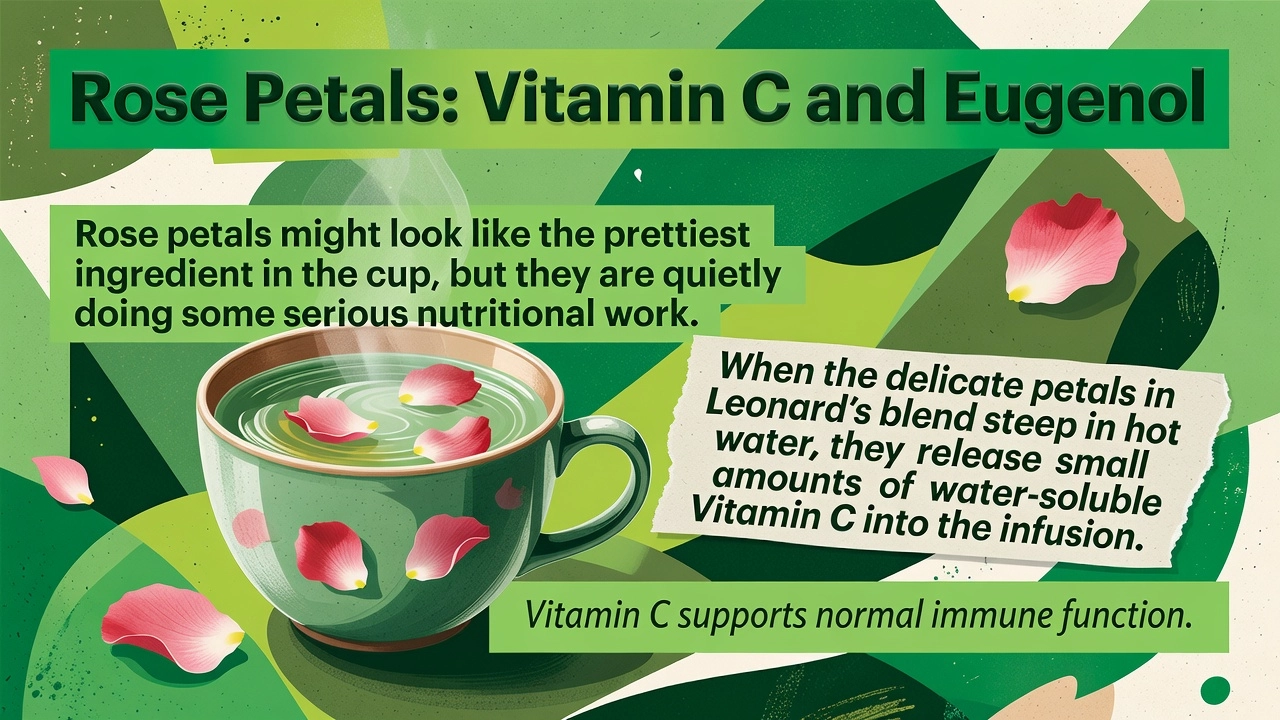
Rose petals might look like the prettiest ingredient in the cup, but they are quietly doing some serious nutritional work. When the delicate petals in Leonard’s blend steep in hot water, they release small amounts of water-soluble Vitamin C into the infusion. Vitamin C supports normal immune function and plays a key role in collagen formation, which is the protein your body relies on for healthy skin, joints, and wound healing. So while you are enjoying a beautifully fragrant cup of tea, your body is receiving a gentle nudge of support in all the right places.
It is worth being honest here: Vitamin C is heat-sensitive, meaning that boiling water will degrade some of the ascorbic acid present in the petals. The amount transferred into your brewed cup will be modest rather than medicinal. However, rose petals are recognised as one of the most Vitamin C-rich botanicals available in herbal blending, so even a heat-reduced yield is a meaningful contribution compared to many other ingredients you might find in a similar cup.
What really sets rose petals apart, though, is something most herbal tea brands never mention. Rose petals contain eugenol, a naturally occurring volatile oil that forms part of their essential oil composition. According to peer-reviewed research on the Rosa genus, rose extracts demonstrate antibacterial effects against various microbiota, with eugenol contributing mild antimicrobial properties that support a healthy gut environment. In simple terms, it helps keep the balance of organisms in your digestive system tipped in the right direction.
Eugenol rarely gets named in consumer-facing herbal tea content, which is exactly why it is worth highlighting here. Rose petals offer far more than flavour and fragrance, and knowing what is actually in your cup is part of what makes Leonard’s approach to blending genuinely different. Between the Vitamin C supporting your skin and immunity, and the eugenol quietly benefiting your gut, those delicate pink petals are earning their place in every batch.
Lavender is often thought of as a fragrance ingredient, something that makes a cup of tea smell lovely and feel relaxing. But the science behind it is genuinely more interesting than that. When the lavender in Leonard’s blend steeps in hot water, it releases two active aromatic compounds called linalool and linalyl acetate. These are volatile oils, meaning they pass into both the liquid you drink and the steam you inhale as you hold the cup. Both compounds have been studied for their calming properties, and the evidence suggests their effects go well beyond a pleasant smell.
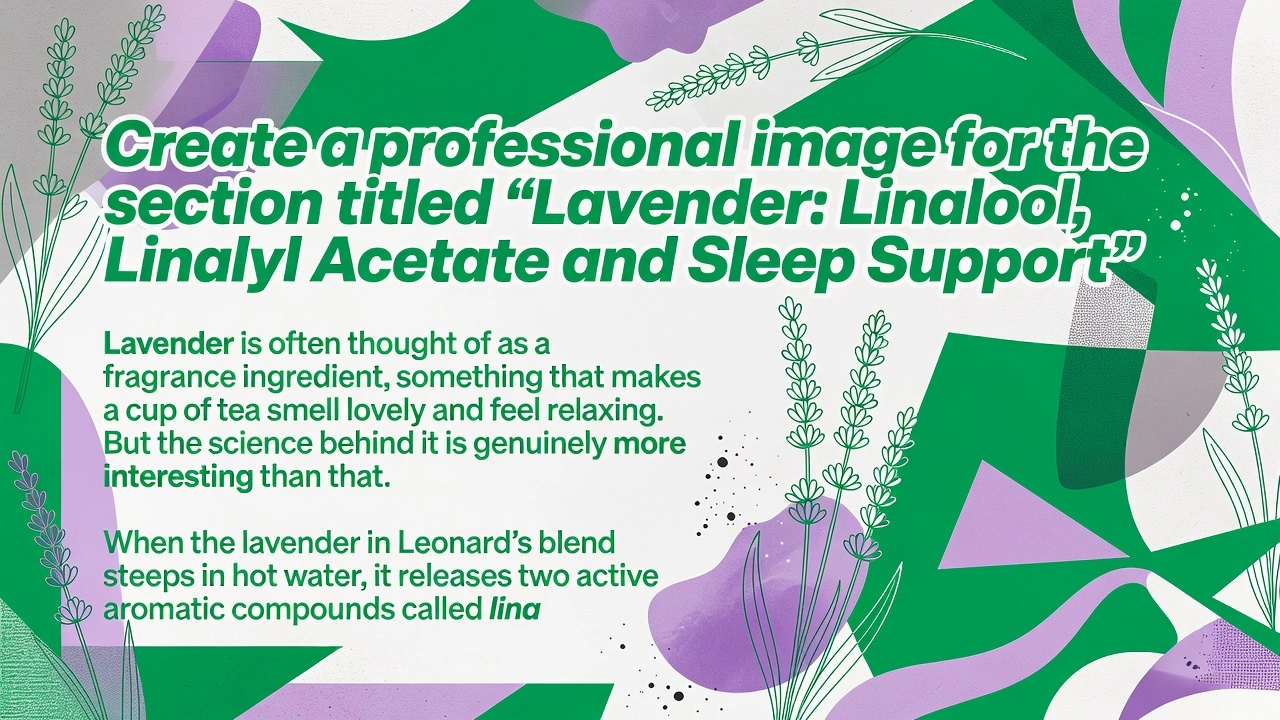
What makes linalool and linalyl acetate particularly noteworthy is their ability to cross the blood-brain barrier, reaching the brain directly rather than simply acting on the senses. According to research published in Lavender and the Nervous System in Evidence-Based Complementary and Alternative Medicine, lavender oil shows genuine neurological activity, including anxiolytic and mood-stabilising properties. Linalool has also been found to interact with the brain’s own neurochemical pathways, which helps explain why lavender has a measurable, physiological calming effect rather than just a psychological one.
There is another layer to this worth knowing. Research from the Sleep Foundation highlights lavender as one of the most well-supported botanicals for improving sleep quality, and a 2019 study found it may also support the body’s own melatonin production. That matters here because research published on ResearchGate indicates that hemp seeds themselves can feature high levels of melatonin, the hormone responsible for regulating your sleep-wake cycle. In Leonard’s blend, lavender and hemp seed are not just flavour companions; they may be working in the same biological direction at the same time.
For anyone looking to build a simple evening wind-down ritual, that complementary pairing is worth paying attention to. A warm, caffeine-free cup before bed, combining lavender’s linalool with hemp seed’s natural melatonin associations, is a genuinely coherent functional choice. It also reflects one of the biggest shifts in the herbal tea market right now. Heading into 2026, wellness, sleep health and stress reduction are among the leading reasons people are reaching for herbal infusions, making this the right blend at exactly the right moment.
So far, we have looked at individual ingredients and what each one brings to the cup. But here is where the story of Leonard’s blend gets really interesting. When you combine hemp seed, mint, lavender and rose petals together in a single infusion, something greater than the sum of its parts starts to happen, and it all comes down to polyphenols.
Each of the four botanicals in Leonard’s blend contributes its own polyphenolic compounds to the finished tea. Hemp seeds contain polyphenols alongside tocopherols and phytosterols, which is one of the reasons a 2025 review in Frontiers in Nutrition specifically evaluated hempseed’s cardioprotective potential. Mint, lavender and rose petals are all aromatic and medicinal plants, a category that peer-reviewed science confirms as particularly rich in antioxidant polyphenols.
Why does this matter? Because research published in PMC directly links long-term consumption of polyphenol-rich plants to protection against cardiovascular disease, diabetes and certain age-related conditions. Polyphenols work primarily by countering oxidative stress, a process where unstable molecules called free radicals gradually damage cells over time. Left unchecked, oxidative stress is connected to the development of chronic disease, so having a regular dietary source of antioxidants genuinely matters.
The real advantage of a thoughtfully composed four-botanical blend is polyphenol diversity. Each ingredient brings structurally different compounds, covering a broader range of antioxidant activity than any single-ingredient tea could achieve. This is not a new idea either. Tea has been consumed medicinally for thousands of years and is considered, after water, the most widely drunk beverage on the planet. That legacy was built, in large part, on exactly this kind of polyphenol activity.
Here is something worth pausing on after everything we have covered above. Every single nutrient in Leonard’s blend, the omega fatty acids from hemp seed, the magnesium and iron, the Vitamin C from rose petals, the menthol and linalool, the polyphenols threading through the whole cup, arrives without a single milligram of caffeine attached.
That matters more than it might first appear. Leonard’s Herbal Hemp Tea is technically a tisane, a botanical infusion made entirely from plants that have never belonged to the caffeine-producing Camellia sinensis family. This is meaningfully different from a decaffeinated drink, where caffeine was present and chemically removed. Here, caffeine was simply never part of the picture.
The practical result is a cup you can enjoy at any hour. No stimulant spike at 8am, no afternoon energy crash at 3pm, no restless night after an evening brew. The calming volatile oils from lavender, the digestive support from menthol, and the steady background of minerals and polyphenols all work without any stimulant interference.
This also explains why the global herbal tea market is a major and growing segment of the botanical beverages sector in 2026, driven largely by consumers actively seeking drinks that support sleep, digestion, and immunity without stimulants.
The real value, though, comes from consistency. Nutrients like magnesium, omega fatty acids, and polyphenols build their benefits gradually. A daily cup of Leonard’s blend is not a dramatic health event; it is a quiet, purposeful ritual that accumulates real value over time, morning or evening, without compromise.
If you have made it this far through the ingredients in Leonard’s blend, you might have one question sitting in the back of your mind. Something along the lines of: “It comes from hemp, so is it actually okay to drink?” It is a completely fair thing to wonder, and it is one of the most common points of confusion around hemp tea in general. So let’s clear it up simply and directly.
The first thing to understand is that Leonard’s blend uses hemp seed, not CBD flower. This distinction matters more than it might seem. Hemp seed is the edible kernel of the plant, the same ingredient you will find in supermarket hemp seed oils and protein powders. It is selected for its nutritional profile, its gentle nutty flavour, and its fatty acid content. CBD flower, by contrast, is the part of the cannabis plant where cannabinoids are concentrated. Leonard’s tea has nothing to do with that.
Hemp contains 0.03% or less THC, the compound responsible for the psychoactive effects associated with cannabis. That figure is so small it is essentially negligible. It means the tea has absolutely no psychoactive effect, and it sits firmly within UK food and beverage law as a standard food-grade ingredient.
This product is regulated as a botanical herbal infusion, not as a CBD supplement or medicinal product. You can think of it in exactly the same category as any other herbal tea. It is simply a naturally nutritious, caffeine-free drink you can enjoy every day with complete confidence.
Everything covered in this article, from the omega fatty acids in hemp seed to the linalool in lavender and the menthol in mint, only tells a complete story if the ingredients themselves are genuinely good. That is where Rowchester Farm comes in.
Leonard’s Herbal Hemp Tea is grown and blended at Rowchester Farm in the Scottish Borders, with British-grown hemp seed sitting at the heart of every batch. Because the hemp is grown on home soil rather than imported through an international supply chain, every pouch carries full traceability from field to finished product. That level of transparency is genuinely rare in the herbal tea category, where ingredients often pass through multiple countries before reaching your cup.
Every ingredient, hemp seed, mint, lavender and rose petals, is selected for quality and used without artificial additives. This matters nutritionally because it means the compounds described throughout this article are present in their natural, unaltered form rather than alongside synthetic flavourings or fillers.
Small-batch hand-blending also plays a direct role here. Volatile oils like linalool and menthol are delicate compounds that can degrade under aggressive industrial processing. Making each blend with care rather than at industrial scale helps preserve the integrity of those compounds.
When Leonard’s say great tea starts with great ingredients, that is not a tagline. It is the reason the nutritional story in this article is real.
Four botanicals. One naturally caffeine-free cup. A surprisingly impressive list of nutrients.
When you bring together British-grown hemp seed, mint, rose petals, and lavender in a single blend, the result is more than just a pleasant drink. Hemp seed contributes omega-3 and omega-6 fatty acids, soluble amino acids, magnesium, and iron. Mint adds menthol for digestive comfort alongside potassium to support fluid balance. Rose petals bring Vitamin C and eugenol, a gentle antimicrobial compound. Lavender rounds everything out with linalool and linalyl acetate, compounds with real, research-backed links to relaxation and sleep support.
All of this arrives without a single milligram of caffeine, because every ingredient in Leonard’s blend is naturally caffeine-free by biology, not by processing. That makes each cup a purposeful daily ritual rather than a compromise.
Leonard’s Herbal Hemp Tea is a food-grade, UK-legal herbal infusion made with British-grown hemp seed and no artificial additives, crafted at Rowchester Farm in the Scottish Borders.
If any of this has sparked your curiosity, explore the product page or visit the learn section to find out more about how the blend is made.
Now you know what is really inside your cup! Herbal hemp tea delivers a genuinely impressive lineup of nutrients, including essential vitamins, beneficial minerals, and soothing compounds that your body can truly use. It is a simple, enjoyable way to support your overall wellness without overthinking your routine. Best of all, it fits naturally into any lifestyle, whether you are a longtime tea lover or just getting started on your wellness journey.
Ready to experience these benefits for yourself? Pick up a quality herbal hemp tea, brew yourself a warm cup, and start paying attention to how you feel. Small, consistent habits are often where the biggest changes begin. Your next step toward feeling better might be as simple as putting the kettle on.
Breathing should be effortless, yet millions of people struggle daily with congestion, inflammation, and respiratory
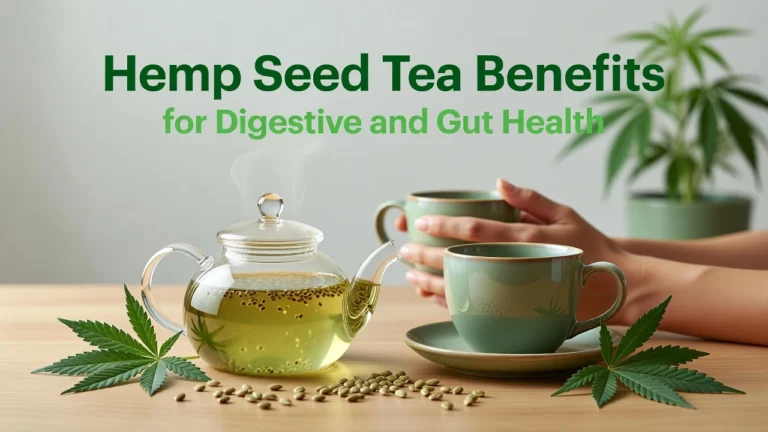
Have you ever felt bloated, sluggish, or just plain uncomfortable after a meal? You are