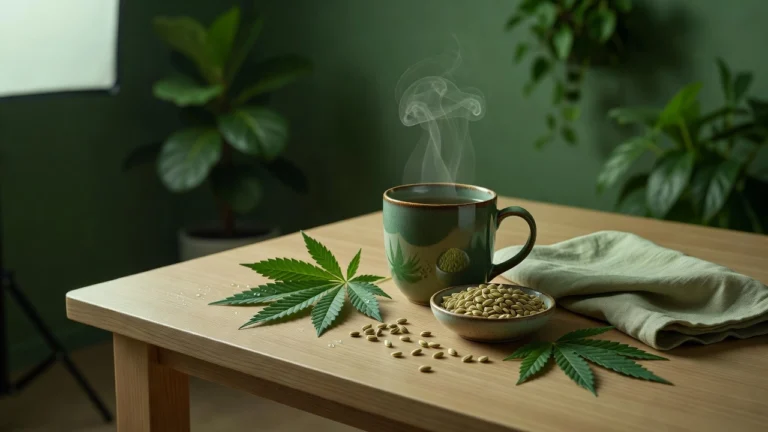
Hemp Seed Tea Benefits for Respiratory and Congestion Relief
Breathing should be effortless, yet millions of people struggle daily with congestion, inflammation, and respiratory
There’s something almost magical about dropping a handful of fragrant herbs into hot water and watching them slowly release their color, aroma, and flavor. If you’ve only ever used tea bags, you’re in for a real treat.
Loose leaf herbal tea is exactly what it sounds like: real, unpackaged herbs, flowers, and botanicals that you brew directly in water without the confines of a tiny paper bag. And honestly? It’s one of the easiest and most rewarding upgrades you can make to your daily tea ritual.
Maybe you’ve spotted beautiful glass jars of dried herbs at a local shop and wondered what to do with them. Or perhaps a friend handed you a bag of loose chamomile and you’ve been staring at it on your kitchen counter ever since. Either way, you’re in the right place.
In this guide, we’re going to walk through everything a beginner needs to know. You’ll learn what loose leaf herbal tea actually is, what simple tools you need to get started, and how to brew a perfect cup every single time. Let’s get into it!
Loose leaf herbal tea is exactly what it sounds like: whole or minimally processed plant material that you steep directly in hot water, with no pre-filled bag or sachet involved. Think flowers, seeds, leaves, and roots in their most natural state, held loosely in an infuser or strainer while they slowly release their flavour and goodness into your cup. It is a beautifully simple format, and once you understand what makes it different, it is very hard to go back.
The key distinction from standard tea bags comes down to what is actually inside them. Most conventional bags contain what the industry calls “fannings” or “dust”, the tiny fragments and powdery residue left over after tea processing. These fine particles infuse quickly but lose nuance just as fast. Loose leaf botanicals, by contrast, remain largely intact, which means they expand freely in water and release their full range of aromas and flavours gradually. Standard tea bags can also contain bleached paper, metal staples, synthetic mesh, and filler material. None of those things belong in your cup, and with loose leaf, none of them are present.
Herbal tea is its own distinct category, quite separate from black, green, or white teas. Those all come from a single plant called Camellia sinensis. Herbal teas, by contrast, are plant-based infusions made from flowers, seeds, leaves, and roots of entirely different botanicals, such as lavender, mint, chamomile, and rose petals. Because no Camellia sinensis is involved, all genuine herbal teas are naturally caffeine-free, making them a wonderful choice at any time of day, including last thing at night.
So now you know what loose leaf herbal tea actually is, the natural next question is: why bother? It takes a little more effort than dropping a bag into a mug, so what do you actually gain?
Quite a lot, as it turns out.
When whole botanicals, think dried mint leaves, lavender buds, or rose petals, are given room to expand in hot water, they release a fuller range of natural oils and aromatic compounds than their bag-bound counterparts ever could. Standard tea bags typically contain finely milled plant material, sometimes little more than dust, that has already lost much of its volatile character through processing and compression. Loose leaf botanicals, by contrast, unfurl slowly as they steep, delivering a more layered, complex flavour in every cup. You can actually taste the difference, and once you have, it’s hard to go back.
You are far from alone in making this switch. The global loose leaf tea market was valued at $11.48 billion in 2025 and is forecast to reach $16.92 billion by 2033, driven largely by consumers seeking natural, minimally processed drinks. People are reading labels more carefully, choosing ingredients they recognise, and gravitating toward products that feel genuinely wholesome. Loose leaf herbal tea fits that mindset perfectly.
Choosing a caffeine-free herbal tea is rarely just about avoiding caffeine. Many people reach for a calming herbal blend as part of an evening wind-down routine, to support more restful sleep, or simply to create a quiet, mindful moment in an otherwise busy day. Others are actively reducing their overall caffeine intake without wanting to give up the comfort of a proper brew. According to research on the herbal tea market, chamomile alone accounts for 32% of the herbal tea ingredient segment, largely because of its association with relaxation and sleep. That tells its own story about why people are choosing these teas and when.
There is something genuinely grounding about the process of measuring out loose leaf, watching it steep, and taking a moment that belongs entirely to you. It is a small, deliberate act that a teabag simply cannot replicate. Market analysts note that consumers are increasingly seeking authentic, high-quality tea experiences, and that shift reflects something real: people want more intention in their daily habits, not less.
With tea bags holding 58% of the herbal tea packaging market in 2026, loose leaf is very much the road less travelled. That is precisely what makes it the more considered, less commoditised option. When you choose loose leaf, you are stepping outside the mass-market default and choosing quality on purpose.
A great loose leaf herbal tea is only as good as the ingredients that go into it. To show you what thoughtful blending actually looks like in practice, let’s walk through the botanicals behind Leonard’s Herbal Hemp Tea, crafted at Rowchester Farm in the Scottish Borders. Each ingredient has been chosen deliberately, not to bulk out the blend, but because it genuinely earns its place in the cup.
Hemp seed is an unusual choice for a tea blend, and that is exactly what makes it interesting. It brings an earthy, nutty, and smooth character to the cup, grounding the blend without overpowering the lighter floral notes around it. Leonard’s hemp seed is British-grown, which makes it a genuinely local ingredient with real provenance. It is also worth being clear on one important point: Leonard’s hemp seed contains no CBD or THC whatsoever. It is simply the seed of the hemp plant, used here purely for its flavour contribution. If you have seen hemp products elsewhere and wondered, the answer is straightforward: this is a botanical tea ingredient, nothing more.
Mint brings brightness and a cooling, refreshing quality that lifts the blend beautifully. Its clean finish makes this tea genuinely enjoyable at any time of day, whether that is first thing in the morning or as a calming evening drink. Lavender adds a fragrant, gently floral note with a calming aromatic quality that has featured in European herbal traditions for centuries. It pairs naturally with both mint and rose, sitting comfortably between them in the flavour profile. Rose petals complete the blend with a delicate, lightly sweet character that softens the earthier notes and adds real visual beauty to the loose leaf. In a loose leaf format, that visual element genuinely matters; opening a tin to find whole, colourful botanicals is part of the pleasure.
The underlying principle at Leonard’s is straightforward: no artificial additives, no fillers, no ingredients added just to pad out the blend. Every botanical included has a clear reason to be there, whether that is flavour, aroma, or character. This kind of honest, purposeful recipe is what separates a quality loose leaf herbal blend from something that simply looks appealing on a shelf. If you want to explore lavender as a botanical tea ingredient in more detail, Leonard’s own guide covers its history, flavour, and brewing in full. It is a reassuring approach, and one that makes every cup feel considered rather than accidental.
The good news for anyone new to loose leaf tea is that you do not need a cupboard full of specialist equipment to get started. A simple mesh tea infuser placed inside your favourite mug is genuinely all you need. If you have a teapot with a built-in basket, even better, but it is absolutely not a requirement. A small strainer held over your cup works just as well. The barrier to entry here is low, and that is part of what makes loose leaf so accessible once you take that first step beyond the teabag.
A good starting point for most herbal loose leaf blends is one heaped teaspoon per cup, which works out at roughly 2 to 3 grams. Because dried botanicals like flowers and herbs tend to be bulkier and less dense than conventional teas, you may find a slightly more generous measure suits your blend best. The key is to start with that heaped teaspoon and adjust from there. Prefer something lighter? Use a little less. Want more depth and body? Add a touch more. After a few brews, you will naturally find your preferred measure without thinking about it. For practical guidance on ratios, this loose leaf tea brewing guide is a helpful reference point.
Water temperature makes more difference than most beginners expect. For herbal teas, water that is just off the boil, around 90 to 95 degrees Celsius, tends to give the best results. Fully boiling water can mute the more delicate floral notes in a blend, and if your tea contains lavender or rose petals, that is a shame worth avoiding. Simply boil your kettle and leave it to rest for a minute or two before pouring. It is a small habit that genuinely improves the cup.
Five to seven minutes is a reliable starting point for most herbal loose leaf blends. The good news for beginners is that herbal teas are far more forgiving than caffeinated varieties; you are unlikely to introduce bitterness by steeping a little longer. Taste at five minutes and decide whether you want more intensity. Unlike many teas, a well-made loose leaf herbal blend can often be steeped a second time, producing a softer, more subtle second infusion that is lovely in its own right.
Perhaps the most underrated part of brewing loose leaf tea is what it does for your day beyond the cup itself. Using a favourite mug, watching the botanicals unfurl, and taking a quiet moment while it steeps turns an everyday drink into a small, intentional pause. This is where loose leaf genuinely earns its place in a daily routine, not just as a beverage, but as a moment of calm you can return to whenever you need it.
When you pick up a loose leaf herbal tea, one of the most meaningful questions you can ask is simply: where did this actually come from? That question sits at the heart of what farm-to-cup really means. Rather than sourcing ingredients anonymously through layers of intermediaries, a genuine farm-to-cup approach means every botanical is grown, selected, and blended under direct oversight. You know the soil it came from, the hands that tended it, and the care taken at every stage before it reaches your cup. That level of traceability is simply not possible at commodity scale, where ingredients can pass through multiple countries and wholesalers before anyone brews a pot.
For Leonard’s Herbal Hemp Tea, that story begins at Rowchester Farm in the Scottish Borders. This is a working farm in the truest sense, set within a landscape shaped by centuries of agricultural tradition, where blending happens with direct care for both quality and the land itself. There is something genuinely meaningful about a tea that is crafted where the ingredients are grown, rather than assembled in an anonymous processing facility somewhere far removed from any field.
The British-grown hemp seed at the heart of Leonard’s signature blend carries a provenance story worth pausing on. Cultivated in the UK and fully traceable, it represents a modern expression of a much older tradition of British botanical farming. Paired with mint, lavender, and rose petals, each chosen with the same commitment to honest sourcing, the result is a blend rooted in a specific place rather than a generic supply chain.
Sustainability, in this context, is not a label applied after the fact. Small-batch production, no artificial additives, and honest ingredient sourcing are the operational reality behind the word. This matters because, as the European loose-leaf tea market analysis from Market Data Forecast confirms, ethical sourcing and sustainable packaging are now among the most significant drivers of growth in the market through 2034. Consumers in 2026 are increasingly sceptical of vague eco-claims and are looking for brands whose values are visible in what they actually do.
Provenance also connects directly to flavour in ways that are easy to underestimate. Botanical ingredients grown with attention to soil health, climate, and seasonality carry the character of their origin into the cup. That depth of flavour, the kind that reveals itself slowly as you sip, is something that anonymous, commodity-scale blending simply cannot replicate. It is the difference between an ingredient that was grown and one that was merely sourced.
There is something genuinely special about receiving a loose leaf herbal tea as a gift. Unlike a supermarket box grabbed at the last minute, it signals that the giver has actually thought about what the recipient might enjoy. It says: I know you, I found something quality, and I wanted to give you something worth savouring. That combination of care and craftsmanship is precisely why loose leaf tea has become one of the quiet stars of the premium gifting world, with research confirming that gifting occasions are now one of the key commercial drivers behind loose leaf market growth heading into 2026 and beyond.
The occasions where a loose leaf herbal tea really shines as a gift are wonderfully varied. Birthdays, Mother’s Day, Christmas, a heartfelt thank-you, or a housewarming present all work beautifully. It suits the tea enthusiast who already has a favourite infuser, but also the friend who has never tried loose leaf before and deserves a gentle, inviting introduction.
When choosing a gift-ready blend, look for a few things: a distinctive and memorable flavour profile, packaging that feels considered and lovely to receive, clear information about what is inside and where it came from, and a brand story that is genuinely worth sharing.
That last point is where something like Leonard’s really stands out. Made on a working farm in the Scottish Borders, using British-grown hemp seed, mint, lavender and rose, every pouch carries a real sense of place and purpose. Giving someone a tea grown and crafted with that kind of honesty feels far more meaningful than anything from a supermarket shelf.
If you have made it this far, you already know the answer. Better flavour, genuine botanicals, naturally caffeine-free, and a simple daily ritual that is worth building into your routine. Loose leaf herbal tea is not a complicated hobby reserved for specialists; it is just a better way to make a cup, and it is more accessible than most people expect.
All you need to get started is a basic mesh infuser, some hot water, and a little patience while the leaves do their thing. Pop your infuser into your favourite mug, add a teaspoon of loose leaf blend, pour over freshly boiled water, and let it steep for around five to ten minutes. That is genuinely all there is to it.
If you are looking for a good place to begin, our hemp, mint, lavender, and rose blend is crafted right here at Rowchester Farm in the Scottish Borders. It is smooth, naturally caffeine-free, and full of real botanical flavour with no artificial anything. Take a look at our blend on the product page and see if it feels like the right cup for you.
And if you have questions, whether about the ingredients, how we grow and source them, or simply how to brew a better pot, please do ask. We are a family farm and we genuinely love hearing from curious tea drinkers. There are no silly questions here, only good ones.
Loose leaf herbal tea is simpler than it looks, and now you have everything you need to get started. You know what it is, which basic tools make brewing easy, and how to craft a perfect cup from scratch. Most importantly, you understand that real herbs deliver a depth of flavor and aroma that tea bags simply cannot match.
The best part? You don’t need to overthink it. Grab a simple infuser, pick an herb that appeals to you, and start experimenting. Your first cup might surprise you.
So pull those dried herbs off the counter, heat some water, and give it a try today. Once you experience the difference that fresh, quality botanicals make in your mug, there’s a good chance you’ll never look at a tea bag the same way again.
Breathing should be effortless, yet millions of people struggle daily with congestion, inflammation, and respiratory
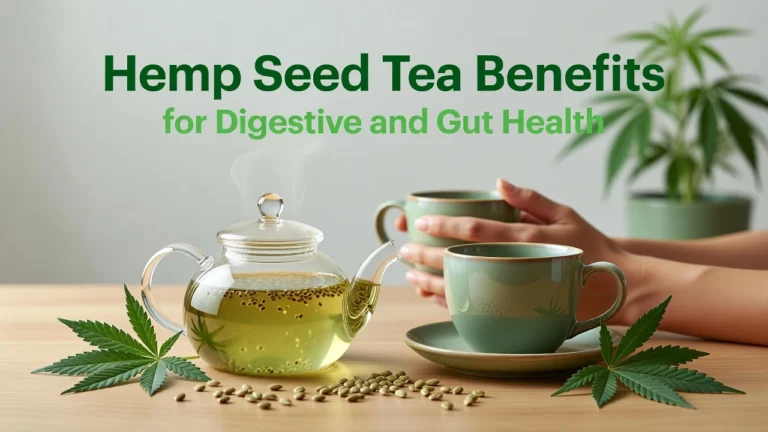
Have you ever felt bloated, sluggish, or just plain uncomfortable after a meal? You are