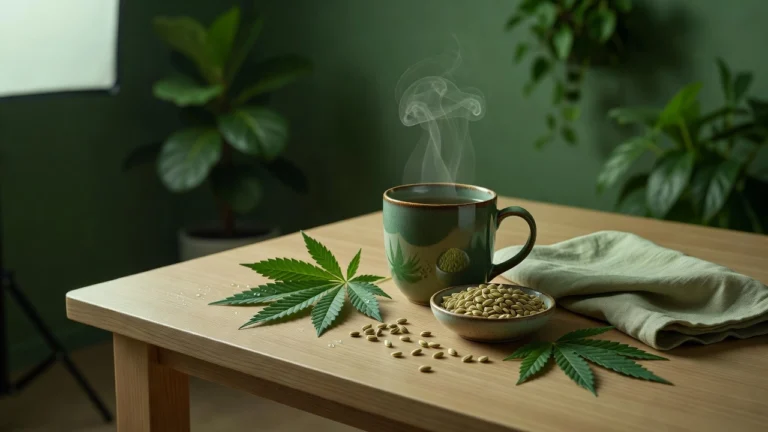
Hemp Seed Tea Benefits for Respiratory and Congestion Relief
Breathing should be effortless, yet millions of people struggle daily with congestion, inflammation, and respiratory
Have you ever wondered why so many people are swapping their morning coffee for a warm cup of herbal hemp tea? It turns out there is a lot more going on in that cozy mug than just a pleasant flavor.
If you are new to the world of wellness teas, you are in for a treat. Herbal hemp tea is quietly making waves for its impressive antioxidant tea benefits, and honestly, it deserves all the attention it is getting. Antioxidants are basically your body’s defense team, working hard to protect your cells from everyday damage caused by stress, pollution, and even the food we eat.
The good news is that you do not need a science degree to understand how this works or to start enjoying the benefits yourself. In this post, we are breaking everything down into simple, easy-to-follow points. By the time you finish reading, you will know exactly what antioxidants are, how herbal hemp tea delivers them, and why adding this soothing drink to your daily routine might just be one of the easiest health upgrades you can make.
If you’ve ever heard the word “antioxidant” and nodded along without being entirely sure what it means, you’re not alone. Let’s break it down in plain, simple terms before we dive into the good stuff.
Your body naturally produces molecules called free radicals as a by-product of everyday biological processes like digestion, exercise, and normal cell activity. You also pick them up from the outside world through things like air pollution, UV light from the sun, and cigarette smoke. The problem with free radicals is that they’re unstable; they carry an unpaired electron and essentially go searching for another molecule to “steal” from. This chain reaction can cause damage to your cells, proteins, and DNA over time. According to the Harvard T.H. Chan School of Public Health, this is a completely normal part of being human, but balance is key.
That balance is where oxidative stress comes in. When free radicals outnumber your body’s natural defences, the resulting imbalance is called oxidative stress. Research published in Frontiers in Pharmacology identifies this imbalance as an active area of study in nutrition science, with dietary antioxidants, particularly polyphenols, being explored for their ability to help neutralise free radicals before cellular damage builds up.
So where do plants fit in? Plants are naturally packed with antioxidant compounds, and the ingredients in Leonard’s Herbal Hemp Tea are a brilliant example of that. Throughout this post, we’ll be looking at three main families of antioxidant compounds:
Each of these occurs naturally in the botanicals used in our blend. Peer-reviewed research recognises herbal infusions as genuine sources of health-relevant bioactive compounds, which is why understanding what’s actually in your cup matters. That said, this post is educational background rather than medical advice; absorption of these compounds varies between individuals, and a cup of tea is one part of a balanced lifestyle, not a cure-all. With that framing in place, let’s take a closer look at each ingredient.
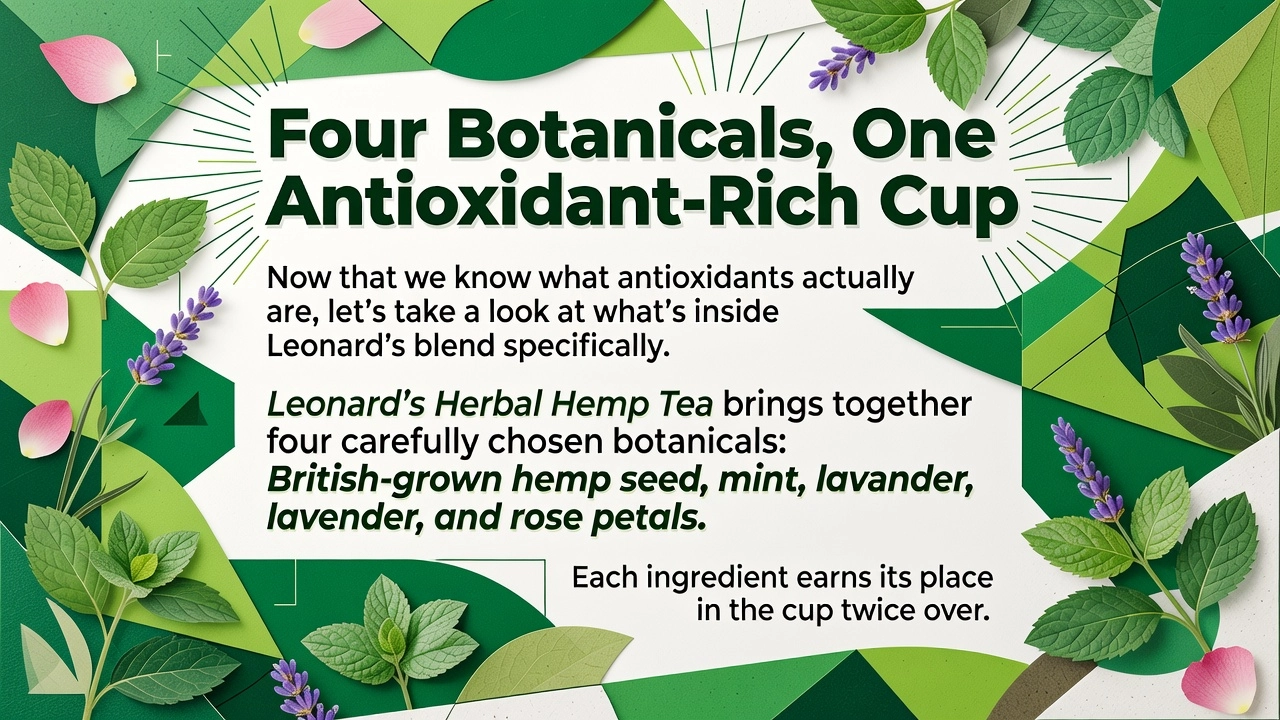
Now that we know what antioxidants actually are, let’s take a look at what’s inside Leonard’s blend specifically.
Leonard’s Herbal Hemp Tea brings together four carefully chosen botanicals: British-grown hemp seed, mint, lavender, and rose petals. Each ingredient earns its place in the cup twice over, first for its flavour, and second because food science researchers have independently examined each one for the plant compounds it contains. This isn’t a random mix of pretty flowers. It’s a thoughtful blend crafted at Rowchester Farm in the Scottish Borders, with no artificial additives and no shortcuts.
Hemp seed forms the base of the blend, giving it a smooth, nutty foundation. The mint, lavender, and rose petals are chosen with the same honest, keep-it-natural approach that runs through everything Leonard’s does.
The sections coming up break down what researchers have actually found in each of these four botanicals, looking at the specific compounds present and what the science says about them. It’s worth being upfront here: this is not a claim that this tea treats, prevents, or cures anything. Think of it as an honest, research-informed look at these individual ingredients and the plant compounds they naturally contain. The science is genuinely interesting, and you deserve a straight read of it.
Lavender is often thought of as a scent first and a tea ingredient second. But here’s something worth knowing: the same plant compounds that make lavender smell so distinctive are also doing some genuinely interesting work at the cellular level.
Let’s start with flavonoids. These are natural plant pigment compounds found across a wide range of botanicals, and lavender contains some well-studied ones, including luteolin and apigenin. Flavonoids are widely researched for their ability to neutralise free radicals and reduce oxidative damage at the cellular level, with peer-reviewed literature firmly establishing them as biologically relevant dietary compounds rather than incidental parts of a plant’s chemistry.
Then there are terpenes, which are the aromatic molecules responsible for lavender’s signature calming scent. The key ones here are linalool and linalyl acetate. What makes terpenes particularly interesting in a tea context is that the fragrance and the function are actually chemically linked. These molecules are biologically active, meaning they contribute to lavender’s antioxidant profile in their own right, not just as a pleasant bonus on top of the other compounds.
Rounding things out are polyphenols, the broad antioxidant family found across fruits, vegetables, and botanical plants. Lavender contains a range of polyphenolic compounds that help lower oxidative stress in the body by targeting free radicals through several different mechanisms. This puts lavender firmly within the same well-researched botanical category that food scientists have studied extensively.
What this means in practical terms is that the calming floral note lavender brings to a cup of Leonard’s blend is matched by a real antioxidant contribution at the compound level. The flavour and the function come from the same place. Lavender earns its place in this blend on scientific grounds, not just sensory ones.
Mint might seem like a simple flavouring, but it brings a surprisingly serious antioxidant profile to your cup. The headline compound here is rosmarinic acid, and it’s worth understanding why food scientists get so excited about it. Rosmarinic acid is the dominant phenolic compound found in mint and other plants belonging to the Lamiaceae family. It’s a potent polyphenol that has been widely studied for its free-radical scavenging capacity and therapeutic potential, meaning it actively works to neutralise the unstable molecules that cause oxidative stress in your body. For a beginner-friendly way to think about it: rosmarinic acid is essentially one of mint’s most hardworking defenders, and it shows up in meaningful amounts every time you brew a cup.
But rosmarinic acid doesn’t work alone. Mint also contains flavones and flavanones, plant pigments that sit within the broader flavonoid family. Specific examples include compounds like acacetin and tilianin, and research highlights that spearmint tea contains both flavonoids and rosmarinic acid, with these antioxidants working together to support your body’s defences. Think of them as a supporting cast that adds meaningfully to the total antioxidant value of a mint infusion, complementing rather than competing with the rosmarinic acid content.
What makes mint particularly noteworthy among everyday culinary herbs is that the Lamiaceae family, which includes mint, peppermint, and spearmint, is consistently flagged in nutritional research as an especially rich source of phenolic compounds relative to the small amount you’d typically use in a tea blend. You don’t need a large quantity to get a genuine antioxidant contribution.
There’s also something satisfying about the fact that mint’s bright, refreshing flavour and its antioxidant properties come from the same place. The plant chemistry that gives mint its distinctive cooling quality is the same chemistry underpinning its bioactive value. It isn’t just there to make the blend taste good, although it certainly does that.
When mint is paired with lavender and rose petals, as it is in Leonard’s blend, research into polyphenol interactions suggests that combining herbs can produce synergistic antioxidant effects, building a cumulative profile across the whole cup that’s greater than any single ingredient on its own.
Don’t let the delicate, floral impression of rose petals fool you. Of all four botanicals in Leonard’s blend, rose petals arguably bring the most impressive antioxidant compound profile to the cup.
Rose petals are exceptionally high in polyphenols, the broad family of plant compounds we introduced earlier that work to protect your cells from oxidative damage. Research published in Scientia Horticulturae examining 23 ornamental rose cultivars confirmed that rose flowers are “a rich source of phenols, flavonoids, and anthocyanins”, with the authors concluding they are strong candidates for use in functional foods and nutraceuticals. A separate study identified as many as 31 individual flavonols in rose petals alone, which gives you a sense of just how diverse and concentrated the phenolic profile really is.
One specific compound worth highlighting is gallic acid, part of a well-documented class of plant phenolics called hydrolysable tannins. Gallic acid has been studied for its free-radical scavenging activity and its anti-inflammatory properties, making it a meaningful contributor to the overall antioxidant value of rose petals.
Then there are anthocyanins, the natural pigments responsible for giving rose petals their red and pink colours. These compounds are among the most potent free-radical scavengers found in any plant, and research into rose extracts continues to explore their broader biological activity at a cellular level. Here’s a simple rule of thumb worth remembering: the deeper and more vivid the colour of a rose petal, the higher its anthocyanin concentration tends to be. So when you notice those rich pink hues in your cup, that colour is actually telling you something real about what’s in your brew.
Rose petals may add a light, gentle floral note to Leonard’s tea, but the science behind them is anything but lightweight. They are a genuinely antioxidant-dense botanical, and a meaningful part of what makes this blend worth reaching for daily.
So we’ve covered lavender, mint and rose petals. Now let’s look at the ingredient that gives Leonard’s blend its name and sits at the heart of every cup: British-grown hemp seed.
Hemp seed brings something genuinely different to the antioxidant conversation. Rather than a single headline compound, it offers a layered profile of protective molecules that each work in their own way.
Vitamin E in the form of tocopherols is probably the most recognisable of the three. Tocopherols are the fat-soluble form of vitamin E, and they’re among the most well-studied antioxidants in nutritional science. Their main job is protecting cell membranes from oxidative damage, and hemp seed is a recognised source of them. Interestingly, the dominant tocopherol in hemp seed is gamma-tocopherol rather than the alpha form you typically see listed on supplement labels. Both contribute to the seed’s overall antioxidant activity, helping to keep the seed’s healthy polyunsaturated fats stable and intact.
Lignanamides are where hemp seed becomes particularly interesting. These are polyphenolic compounds found specifically in hemp seed, and they’re relatively rare among common food plants. You won’t find a meaningful amount of lignanamides in your average pantry ingredient, which makes them a distinctive and genuinely unique part of what the seed contributes to a botanical blend. According to a 2024 review of hemp seed as a functional food ingredient, hemp seed’s polyphenol content, including compounds like lignanamides, is one of the key reasons it’s attracting growing interest in food and nutrition research.
Phytic acid tends to get a mixed reputation in nutrition circles because it can interfere with mineral absorption. But inside the seed itself, it plays a quietly useful role as an antioxidant, chelating metal ions that would otherwise trigger oxidative breakdown of the seed’s stored fats. Think of it as an internal preservation system built into the seed.
One thing worth addressing clearly: Leonard’s blend uses whole British-grown hemp seed, not a CBD extract. There is no CBD, no THC and no psychoactive compounds in this tea. Hemp seed is a food ingredient with a long history of use, and it is legally and compositionally distinct from CBD-infused products. If that’s been a question in your mind, the answer is simple: this is a botanical tea, full stop.
Taken together, tocopherols, lignanamides and phytic acid give hemp seed a multi-layered antioxidant profile that works as a strong, complementary base to the flavonoids, polyphenols and rosmarinic acid delivered by the lavender, mint and rose petals in the blend.
If you’ve been researching hemp tea online, there’s a good chance you’ve come across products that look quite different from what Leonard’s offers. That’s worth addressing head-on, because the term “hemp tea” actually covers some very different things.
Some teas on the market use extracted cannabidiol (CBD) as a key ingredient. These are purpose-made supplement products, often with dosage guidance on the label and a regulatory status that varies depending on where you live. They’re designed around an active compound that’s been isolated and added to the blend. That’s a fundamentally different product from what’s in your cup when you brew Leonard’s.
Leonard’s uses whole hemp seed, not hemp extract. Hemp seeds contain no CBD and no THC. They’re a food ingredient, in the same straightforward category as the mint, lavender and rose petals they’re blended with. Brewing hemp seed tea is genuinely no different, in legal or practical terms, from brewing a cup of chamomile or peppermint. There are no supplements, no extracted active compounds and no legal grey areas to navigate.
The confusion is understandable, particularly because a lot of online content about hemp tea is produced by CBD brands. But the distinction is simple and it matters: Leonard’s blend is a botanical herbal infusion, full stop.
The value here comes from the quality of the ingredients themselves, all carefully selected and blended at Rowchester Farm in the Scottish Borders. No extracts, no additives, just honest botanicals doing what they do naturally.
One of the most practical things about Leonard’s Herbal Hemp Tea is something easy to overlook: it contains absolutely no caffeine. That means you can enjoy a cup at any point in the day, whether that’s with your morning routine, during an afternoon break, or as part of an evening wind-down, without any of the sleep disruption that caffeinated drinks can bring. For anyone trying to reduce their caffeine intake without giving up a warm, comforting brew, that flexibility matters.
And really, that’s the beauty of turning this into a daily habit. You don’t need supplements, specialist knowledge, or complicated preparation. You just need a cup of hot water and a few quiet minutes. In a single brew, you’re drawing on the antioxidant compounds from four botanicals: lavender, mint, rose petals and British-grown hemp seed, each bringing its own plant compounds to the blend.
That quality starts at Rowchester Farm in the Scottish Borders, where Leonard’s is a family-run business with a genuine commitment to simple, honest ingredients. The hemp seed is British-grown, every batch is crafted in small quantities, and there are no artificial additives anywhere in the blend. Knowing exactly what’s in your cup isn’t a luxury; it’s just how Leonard’s works.
This tea suits anyone drawn to natural wellness rituals, those cutting back on caffeine, or anyone who simply wants a thoughtful, flavourful brew they can feel good about. If that sounds like you, Leonard’s Herbal Hemp Tea is well worth exploring.
By this point, you’ve met all four ingredients individually. Now it’s worth stepping back and looking at what they do together.
Lavender brings flavonoids and polyphenols. Mint contributes rosmarinic acid and flavones. Rose petals add anthocyanins and gallic acid. Hemp seed rounds things out with tocopherols and lignanamides. These aren’t variations on the same compound; they’re genuinely distinct antioxidant classes, each arriving in your cup from a different botanical source. Research into botanical blends suggests that combining multiple polyphenol-rich plants can produce a more diverse antioxidant profile than any single ingredient could offer alone. That’s the quiet logic behind a thoughtfully composed blend.
And because Leonard’s is naturally caffeine-free, grown on a working farm in the Scottish Borders, and made without artificial additives, it fits comfortably into your day rather than sitting on a shelf for special occasions.
If you’re curious to taste how these four botanicals come together, Leonard’s Herbal Hemp Tea is a good place to start. Simple ingredients, honest craft, from Rowchester Farm to your cup.
Herbal hemp tea is more than just a soothing beverage. It is a simple, enjoyable way to flood your body with powerful antioxidants that fight everyday cellular damage, support your overall wellness, and help you feel your best from the inside out. You now know what antioxidants actually do, how hemp and herbal ingredients work together to deliver them, and why this tea deserves a permanent spot in your daily routine.
The best part? Getting started could not be easier. Pick up a quality herbal hemp tea blend, brew yourself a warm cup, and begin experiencing the benefits firsthand. Small, consistent habits are what create lasting change, and this one is genuinely enjoyable to build. Your body works hard for you every single day. Give it the antioxidant support it deserves, one calming cup at a time.
Breathing should be effortless, yet millions of people struggle daily with congestion, inflammation, and respiratory
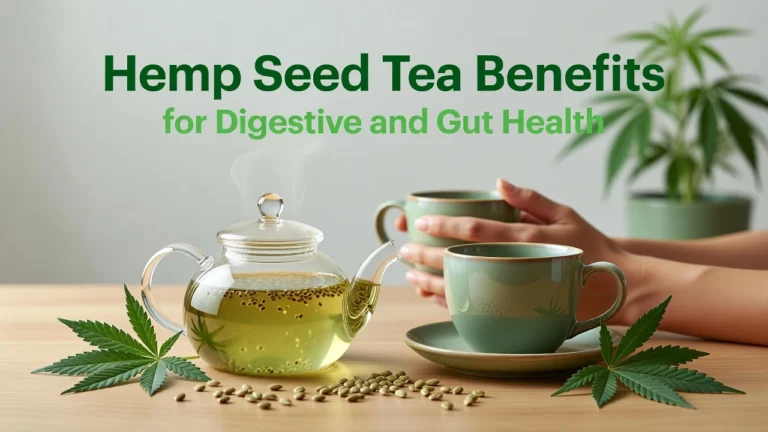
Have you ever felt bloated, sluggish, or just plain uncomfortable after a meal? You are