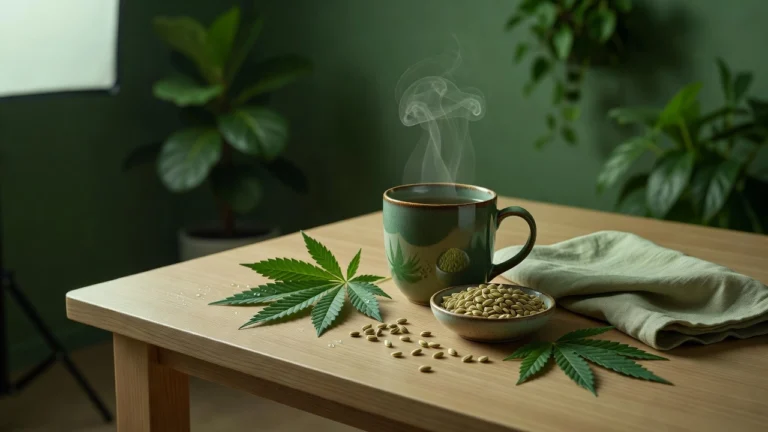
Hemp Seed Tea Benefits for Respiratory and Congestion Relief
Breathing should be effortless, yet millions of people struggle daily with congestion, inflammation, and respiratory
There’s something almost magical about wrapping your hands around a warm mug of mint tea, breathing in that fresh, cool aroma before taking your first sip. But here’s a little secret: if you’ve only ever used tea bags, you haven’t experienced mint tea at its finest.
Brewing loose leaf mint tea is a complete game changer, and the best part is that it’s much easier than it sounds. Whether you’re a total beginner or just someone looking to level up their tea routine, this guide was made for you.
In this post, we’re going to walk through everything you need to know about loose leaf mint tea. From choosing the right leaves and gathering your supplies, to brewing the perfect cup and even exploring some creative ways to enjoy it beyond your morning mug. By the time you finish reading, you’ll feel completely confident making a cup that tastes fresher, brighter, and way more satisfying than anything from a little paper bag. So grab your kettle, and let’s get started!
Loose leaf tea is exactly what it sounds like: whole or minimally processed botanical material, think dried leaves, flowers, roots, and seeds, that you steep directly in hot water rather than tucking inside a bag. If you’ve ever opened a standard tea bag and tipped out the contents, you’ll have noticed it’s more of a fine dust or powder than anything resembling a leaf. That’s known as “fannings” or “dust,” the broken-down remnants left after higher-grade botanical material has been processed. Loose leaf skips that step entirely, keeping your ingredients as close to their natural state as possible.
When it comes to mint specifically, loose leaf tea can be beautifully simple, pure dried peppermint or spearmint leaves steeped on their own, or it can form part of a thoughtfully crafted botanical blend. At Leonard’s Herbal Hemp Tea, our signature blend pairs refreshing mint with British-grown hemp seed, fragrant lavender, and delicate rose petals, creating a smooth, caffeine-free infusion that’s far more interesting than a single-note cup. It’s a lovely example of how mint works as both a star ingredient and a team player.
The appetite for mint tea is genuinely enormous. The global herbal tea market is valued at USD 4.2 billion in 2026, with mint and peppermint sitting among its leading ingredient segments, reflecting just how much people love a minty brew.
Not all mint is the same, though, and understanding the difference really helps as a beginner. Peppermint (Mentha × piperita) is the bold one, intensely cooling with a strong menthol hit that you’ll recognise immediately. Spearmint (Mentha spicata) is noticeably milder and sweeter, making it a gentler introduction to mint tea if peppermint feels a little sharp. Garden mint is a broader, more colloquial term covering common culinary varieties; the flavour tends to be softer and more variable, as explored in this helpful spearmint vs peppermint comparison.
The whole-leaf format genuinely matters here. Mint’s aromatic character comes from essential oils housed within the leaf’s cellular structure. When leaves are ground down, those volatile compounds begin oxidising immediately. Keeping leaves whole preserves that structure until steeping, where they unfurl slowly in the water, releasing flavour progressively and filling your kitchen with that wonderful fresh scent before the cup even reaches your hands. For a deeper look at how spearmint and peppermint differ in flavour and use, it’s worth exploring both varieties side by side.
Here’s something worth knowing before we go any further: tea bags still account for around 58% of the herbal tea packaging market in 2026. That means the majority of people drinking mint tea right now have only ever tasted a product made from finely ground dust and plant fragments, often the leftover material from processing higher-quality whole-leaf teas. If that’s your benchmark, you may genuinely have no idea what a good mint tea is capable of tasting like.
The difference comes down to simple science. Whole mint leaves, lavender buds, and rose petals need space to fully expand in hot water. As they unfurl, they gradually release their volatile aromatic compounds, the delicate molecules responsible for that bright, cooling freshness mint is known for. Finely ground material in a tea bag behaves very differently; its vastly larger exposed surface area means those same compounds off-gas quickly during storage and then exhaust themselves almost immediately on contact with hot water. What you’re often left with is a one-dimensional, sometimes bitter brew rather than a layered, nuanced infusion. You can read more about why loose leaf tea outperforms bagged tea on flavour if you’d like to explore the science further.
There’s also a transparency argument that matters, particularly if you care about what’s actually in your cup. When you open a caddy of well-made loose leaf blend and can clearly see whole mint leaves, soft lavender buds, and rose petals, you know exactly what you’re looking at. There’s no guesswork, no hidden fillers, and no artificial additives. That visible integrity is something an opaque paper bag simply cannot offer.
From an environmental perspective, loose leaf is a quietly sensible choice too. Individually wrapped tea bags typically involve paper, string, and outer packaging for every single cup. A pouch or reusable tin of loose leaf tea generates significantly less waste per brew, which aligns naturally with more eco-conscious purchasing habits.
Yes, loose leaf does ask a little more of you than dropping a bag into a mug. But we’d encourage you to reframe that. Measuring out your tea, watching the botanicals bloom in the water, taking a moment before a busy day or winding down after one; that small ritual is part of what makes the experience genuinely enjoyable. And the good news is, it’s far simpler than it sounds. We’ll walk you through exactly how to do it in the next section.
Getting started is simpler than you might think. You do not need a fancy setup or specialist kit to brew a beautiful cup of loose leaf mint tea. The most popular options for beginners are a fine mesh infuser ball, a basket infuser that sits neatly over your mug, a teapot with a built-in strainer for when you fancy making a bigger batch, or even a French press if you already have one in the kitchen cupboard. All of these are widely available and genuinely affordable, so there is no need to invest heavily before you have even tasted your first brew. If you want a helpful walkthrough of the kit involved, this beginner-friendly brewing guide from Tea Trolley covers the basics clearly and confidently.
One of the most common beginner mistakes is pouring a full rolling boil straight onto delicate botanicals. For a mint-forward herbal blend, water at around 90°C is your sweet spot. Boiling water can scorch the herbs, stripping out the bright, fresh character of the mint and leaving you with something flat or faintly bitter rather than the clean, aromatic cup you were hoping for. If you do not have a temperature-controlled kettle, simply boil your water and leave it to rest for a minute or two before pouring. It is a small step that makes a noticeable difference.
A generous teaspoon, roughly 2 to 3 grams, per 250ml cup is a reliable starting point. Do not worry about precision on your first brew; the aim is to get a feel for your own preference and adjust from there. Pour your water over the leaves, set a timer, and aim for somewhere between three and five minutes. Steeping for longer will not necessarily reward you with more flavour and can push certain herb varieties towards bitterness, so resist the urge to leave it indefinitely.
Here is something that often surprises beginners: quality loose leaf botanicals can usually manage a second infusion. The second steep will be lighter and gently different in character, but it is a lovely, more delicate cup in its own right and it extends the value of every spoonful considerably. For optional finishing touches, a small drizzle of honey or a thin slice of fresh lemon both complement a botanical mint blend beautifully. That said, a well-crafted loose leaf blend, particularly one made with honest, natural ingredients, is more than capable of standing on its own without anything added at all. You can find further practical brewing tips at Arbor Teas if you would like to explore technique a little further as your confidence grows.
The good news is that you do not need to spend much to get started. A mesh ball infuser is the most common entry point, widely available, affordable, and easy to rinse clean after use. They are perfectly portable too, which makes them handy for work or travel. The trade-off is that their compact, spherical shape leaves very little room inside, and that matters more than you might expect.
Botanical blends that contain whole mint leaves, dried petals, and seeds need space to move freely in the water. When these ingredients are crammed into a tight ball, water cannot circulate properly around them, and you end up with a weaker, less flavourful cup. A basket infuser, with its wider bowl and fine stainless steel mesh, solves this neatly. It sits across the rim of your mug, allows full expansion of the botanicals, and delivers noticeably better flavour extraction. For brewing multiple cups in one go, a teapot strainer gives you even more room and is ideal for sharing. You can read more about choosing the right style in this guide to loose leaf tea infusers.
Already own a cafetiere? You are already equipped. A standard French press works brilliantly as an improvised loose leaf brewer; simply steep your blend, then press and pour. No new kit required. For a completely silt-free cup, fine paper filters and reusable cloth bags are also worth exploring, and the cloth option has the added bonus of being washable and plastic-free.
Every cup of Leonard’s blend tells a small story, and it helps to know who the characters are. Here is a closer look at the four botanicals in the mix and why each one earns its place.
Mint is the backbone of this blend, and for good reason. Its natural menthol content is responsible for that bright, cooling finish you notice the moment the steam hits your face. Menthol is a naturally occurring volatile compound found in mint leaves, and it creates a clean, refreshing sensation that is instantly recognisable. It is this quality that has made mint one of the most universally loved herbal ingredients on the planet, found in everything from toothpaste to confectionery. In the cup, it delivers clarity and brightness, giving the blend its signature freshness right from the first sip.
British-grown hemp seed plays a quieter but equally important role. Rather than asserting itself, it contributes a gentle, nutty body and a subtle texture that gives the blend a little more weight and depth. It is worth being straightforward here: Leonard’s blend contains no CBD and no THC whatsoever. The hemp seed used is a purely culinary ingredient, included entirely for its flavour contribution. Think of it in the same way you might think of sesame or sunflower seeds; wholesome, natural, and entirely food-grade.
A small proportion of lavender works wonders in a blend like this. It softens the sharper brightness of the mint, adding a gentle floral note that makes the overall flavour feel rounder and more complete. Lavender is used sparingly in botanical blending, acting as a supporting ingredient rather than taking centre stage. The result is a subtle complexity that rewards a slow, mindful cup. You can learn more about how herbs are combined in tea blending to understand why balance between botanicals matters so much.
Rose petals bring the blend to a close with a delicate, subtly sweet finish. They contribute a faint floral sweetness without any added sugar, and they also give the loose leaf blend a genuine visual beauty. Whole petals in a loose leaf tea are a joy to look at before brewing, and their presence in the cup is a reminder that good tea engages all the senses.
Here is where the format really matters. When botanicals are kept whole, their volatile aromatic compounds remain locked inside the leaves, seeds, and petals right up until they meet hot water. Grinding or processing breaks down that protective structure, allowing those delicate aromas to escape long before brewing. With loose leaf, the release happens at exactly the right moment, giving you a fresher, more complex and more aromatic cup every time.
Choosing a caffeine-free tea is not a compromise. It is a genuinely positive, intentional decision, and one that more and more tea drinkers are making every day. According to the 2025 State of the Tea Industry survey, functional and wellness teas are now the number one consumer trend in tea, with drinkers actively looking beyond caffeine toward natural, botanical properties. A loose leaf mint blend gives you everything you want from a proper cup of tea: full flavour, a satisfying ritual, and a beautiful sensory experience. The only thing missing is the stimulant, and that turns out to be a feature rather than a flaw.
Think about when you actually reach for a cup of tea throughout the day. The morning brew might be a caffeine call, but the mid-afternoon cup, the one you make when you need a quiet five minutes, and the warm drink you settle with in the evening? Those moments are about comfort and ritual far more than energy. A fragrant cup of mint tea in the hour before bed fits perfectly into a wind-down routine, without any of the sleep disruption risk that caffeinated drinks carry. Herbal teas are inherently caffeine-free because they come from botanicals rather than the Camellia sinensis plant entirely, so there is no chemical processing involved. What you are tasting is simply the plant, nothing more.
This also makes loose leaf herbal tea a genuinely daily habit, one you can repeat morning, afternoon, and evening without a second thought. It is a considerate choice for anyone reducing their caffeine intake, for those who find stimulants affect their mood or sleep, and for people who simply want a calming, flavourful drink they can enjoy freely throughout the day. Most tea drinking happens at home as part of a domestic routine, and a good loose leaf blend elevates that everyday moment into something that feels genuinely nourishing rather than just habitual.
On the gifting side, a caffeine-free botanical blend is one of those rare presents that almost everyone can enjoy. There are no dietary caveats to navigate, no stimulant concerns, and no artificial additives to check. Loose leaf herbal teas have become a popular gift choice precisely because they feel considered and personal. Leonard’s blend, crafted at Rowchester Farm in the Scottish Borders with British-grown hemp seed, mint, lavender, and rose petals, arrives with a story attached, which makes it a genuinely thoughtful option for anyone on your list.
Nestled in the rolling countryside of the Scottish Borders, Rowchester Farm is where Leonard’s Herbal Hemp Tea began. This is a family-run business, built not around a boardroom brief or a mass-market gap analysis, but around a genuine love of botanical flavour and a deep respect for British farming heritage. The blend you brew at home today started life here, shaped by the land, the seasons, and the people who tend it.
That connection to a specific place matters more than it might first seem. Most herbal teas sold in the UK are blended at industrial scale from ingredients sourced across multiple continents. There is nothing wrong with that approach, but it does mean the product has no single story, no named field, no family behind it. Leonard’s is the opposite of that. Rowchester Farm is a real location, and the blend it produces reflects a real relationship between British farmland and the ingredients that come from it. No large-scale distributor can credibly replicate that.
One of the most distinctive ingredients in the blend is British-grown hemp seed. Hemp has a long and fascinating history in British agriculture, cultivated across England and Scotland for centuries before falling out of mainstream use. Using home-grown seed rather than imported alternatives connects Leonard’s directly to that tradition and to the countryside the farm calls home. It is worth noting clearly that Leonard’s hemp contains no CBD or THC; it is simply a nutritious, flavourful seed with deep roots in British farming.
Small-batch production means every blend receives careful attention that factory-scale manufacturing simply cannot match. The result is a consistency of flavour and quality that Leonard’s customers come to rely on.
In 2026, more tea drinkers than ever are reading labels carefully and choosing brands with genuine stories. Knowing exactly where your tea comes from, who made it, and that it contains no artificial additives is increasingly the standard people expect rather than a bonus. From Rowchester Farm to your cup, that transparency is something Leonard’s is proud to offer with every single batch.
There is something genuinely lovely about giving a gift that feels considered rather than convenient. Premium loose leaf teas are increasingly being chosen with exactly that intention, as people move away from the standard supermarket box and towards something that feels a little more personal, a little more thoughtful. The loose leaf tea gifting trend has grown steadily, with consumers looking for products that tell a story and offer a real experience.
A botanical blend like Leonard’s ticks several boxes at once. It is completely caffeine-free, free from artificial additives, and it comes straight from a working family farm in the Scottish Borders. That combination of clean ingredients and honest provenance gives it a gift appeal that goes well beyond what you will find on a supermarket shelf.
In terms of occasions, loose leaf herbal tea sits naturally in a handful of gifting moments. A housewarming is a perfect fit, welcoming someone into their new home with something warm and nurturing. A thank-you gift feels more generous when it comes with a story behind it. It works beautifully as a self-care present for someone who values natural, artisan products, and it makes a genuinely lovely seasonal gift at Christmas, Mother’s Day, or any time you want to give something a little different.
Part of the appeal is visual. When you open a pouch of loose leaf botanical tea and see whole leaves, delicate petals, and seeds nestled together, it simply feels special in a way a box of tea bags cannot match.
And perhaps best of all, you are gifting an experience. Brewing loose leaf tea is a small, satisfying ritual, and for many recipients it will be their first time trying it. That makes it far more than a consumable; it is an introduction to something they may well carry into their daily routine for years to come. As tea enthusiasts returning to loose leaf in 2026 have discovered, once you brew loose leaf, it is difficult to go back.
You have everything you need to make a genuinely brilliant first cup. Use around 2 to 3 grams of loose leaf per cup, heat your water to roughly 90°C, steep for three to five minutes, and choose an infuser that gives the botanicals real room to breathe and unfurl. That is honestly all it takes.
The reward for those small steps is a fresher, more layered, more honest cup than a tea bag can offer. Whole botanicals release their flavour gradually and fully, rather than giving you a quick, flat hit and nothing more. The switch is low-effort and high-return, requiring little beyond a simple infuser and a kettle you already own.
Whether you are making the move from tea bags or simply curious about what a botanical blend actually tastes like, the barrier here is genuinely low. Switching to loose leaf is one of those small changes that makes an outsized difference to your daily cup.
When you are ready to explore, Leonard’s signature blend of British-grown hemp seed, mint, lavender, and rose petals is a wonderful place to start. It is naturally caffeine-free, crafted with care on a family farm in the Scottish Borders, and built for exactly this kind of quiet, unhurried moment.
Brewing loose leaf mint tea is one of those small upgrades that makes a surprisingly big difference in your daily routine. You now know how to choose quality leaves, brew them properly for maximum flavor, and explore creative ways to enjoy mint tea beyond the basic cup. Most importantly, you know that fresh, vibrant mint tea is well within your reach, no fancy equipment or expertise required.
The difference between a tea bag and a beautiful cup of loose leaf mint tea is something you truly have to taste to believe. So here is your challenge: pick up some loose leaf mint today and brew your first cup this week. Share it with a friend, try a new variation, or simply enjoy a quiet moment with something made just a little more intentionally. Your best cup of tea is waiting.
Breathing should be effortless, yet millions of people struggle daily with congestion, inflammation, and respiratory

Have you ever felt bloated, sluggish, or just plain uncomfortable after a meal? You are