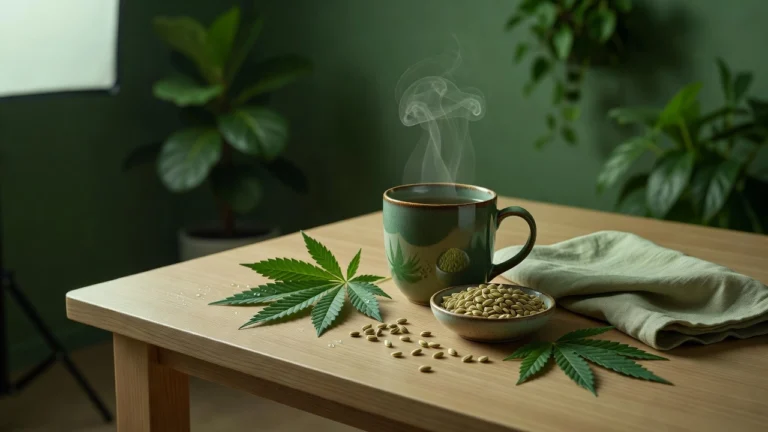
Hemp Seed Tea Benefits for Respiratory and Congestion Relief
Breathing should be effortless, yet millions of people struggle daily with congestion, inflammation, and respiratory
Have you ever wandered down the herbal tea aisle and spotted raspberry leaf tea, wondering what exactly it is and why so many people swear by it? You are definitely not alone. This humble botanical has been quietly winning over tea lovers for centuries, and once you understand what makes it special, you might just find yourself reaching for it regularly too.
Raspberry leaf tea is made from the dried leaves of the raspberry plant, and it brings a surprisingly pleasant, earthy flavor that sits somewhere between green tea and black tea. It is gentle, accessible, and packed with a rich history of traditional use that makes it worth getting to know.
In this guide, we are going to walk through everything a beginner needs to know. We will cover where raspberry leaf tea comes from, how to brew it properly, what it tastes like, and some of the reasons people choose to drink it. Think of this as your friendly, no-fuss introduction to a botanical classic that has stood the test of time. Let’s get started!
If you’ve picked up a packet of raspberry leaf tea expecting something sweet and fruity, you’re in good company. It’s one of the most common surprises for first-time buyers. Raspberry leaf tea is actually made from the dried leaves of the raspberry plant (Rubus idaeus), not the fruit itself. The name can be a little misleading, but once you know what you’re working with, it opens up a genuinely interesting world of botanical flavour.
The raspberry plant has deep roots in British and European botanical history. Rubus idaeus is native to Europe and has been cultivated across the British Isles for centuries, which gives it a real sense of local heritage. According to Herbal Reality, raspberry sits firmly within the tradition of European herbal medicine, where its leaves have been valued long before the fruit ever made it into a crumble. That’s a legacy worth appreciating in every cup.
It’s also worth knowing how raspberry leaf differs from raspberry-flavoured teas. Many supermarket blends labelled “raspberry” are actually black teas or fruit infusions with added flavouring. Raspberry leaf is its own standalone herbal infusion, with a mild, gently earthy taste that’s closer to a light green tea than a fruity cordial. For a more detailed look at what to expect, BBC Good Food’s guide to raspberry leaf tea is a helpful starting point.
Perhaps best of all, raspberry leaf tea is naturally caffeine-free. Because it contains no Camellia sinensis (the plant behind traditional caffeinated teas), there’s simply no caffeine present. That makes it a brilliant choice for anyone cutting back on caffeine or building a calmer daily routine. It’s very much in keeping with the ethos here at Leonard’s Herbal Hemp Tea, where every blend we craft at Rowchester Farm is botanical, honest, and completely caffeine-free by nature.
Here’s the thing that catches almost everyone off guard: raspberry leaf tea tastes nothing like raspberries. Not even a little bit. If you’re imagining something sweet, fruity, and bright, it’s worth adjusting those expectations before your first sip, because the reality is actually quite different and, for many people, far more interesting.
The flavour is best described as earthy, gently herbaceous, and mildly astringent. Think of a light, unflavoured black tea, but without the caffeine or any of the bitterness. It has a subtle, green-forward character that feels grounded and calm rather than floral or fruity. Some describe it as similar to a gentle green tea, though with its own distinct personality.
That mild astringency is worth understanding rather than shying away from. It comes from naturally occurring tannins in the leaf, the same compounds found in black tea and certain red wines. Rather than making the cup taste sharp or unpleasant, those tannins give raspberry leaf tea a satisfying structure and body that many herbal infusions simply lack. It feels like a proper cup of tea, which is part of why so many people find it such a comforting daily choice.
Where raspberry leaf really shines is in a blend. Its earthy base pairs beautifully with mint, rose petals, and other botanicals, creating something more rounded and complex. It’s exactly the kind of thoughtful botanical layering we love at Leonard’s, where balancing flavours from nature is always at the heart of what we do.
Quality makes a genuine difference here too. Well-sourced, freshly dried leaf produces a noticeably cleaner, more rounded cup. If you’ve ever tried a mass-produced version and found it disappointing, a higher-quality loose leaf option can be a real revelation.
Brewing raspberry leaf tea is wonderfully straightforward, and once you’ve got the basics down, you’ll find it one of the easiest herbal teas to make well. Here’s everything you need to know to get a great cup, every time.
Unlike more delicate green or white teas that need cooler water to avoid bitterness, raspberry leaf is a robust herbal infusion that benefits from freshly boiled water at around 95 to 100°C. Go ahead and use your kettle as normal; there’s no need to let it cool down first. For steeping, aim for somewhere between 5 and 10 minutes depending on how you like your tea. A 5-minute steep gives you a lighter, gentler cup, while pushing closer to 10 minutes draws out a fuller, more robust infusion with a deeper, earthier character. Start shorter and adjust from there until you find your sweet spot.
For loose leaf, one heaped teaspoon per cup (roughly 2g) is a reliable starting measure for a standard mug. If you’re using a tea bag format, one bag per cup does the job nicely. Where loose leaf really comes into its own is in the brewing process itself. When leaves have room to move and expand freely in the water, you get better circulation and a fuller extraction of flavour. It’s one of the reasons artisan botanical producers, including the team here at Leonard’s Herbal Hemp Tea, are so passionate about the loose leaf experience. You can read more about harvesting, drying, and brewing raspberry leaf tea if you’re curious about the journey from plant to cup.
Raspberry leaf tea is genuinely lovely served just as it is, allowing its mild, slightly earthy flavour to shine without distraction. That said, a slice of fresh lemon adds a pleasant brightness, and a light drizzle of honey works beautifully for anyone who prefers a gentle touch of sweetness. Both additions complement the tea without overpowering its natural character.
If you fancy something refreshing on a warmer day, raspberry leaf also makes a brilliant cold infusion. Brew it at double strength, allow it to cool completely, then pour it over a glass of ice for a naturally caffeine-free botanical drink that’s surprisingly satisfying. It’s a simple way to enjoy something a little different without any fuss.
One of the loveliest things about raspberry leaf tea is how naturally it fits into any part of your day. Because it is completely caffeine-free, you are not restricted to drinking it only in the morning or only in the evening. Fancy a gentle start before your first meeting? It works beautifully. Need a quiet moment mid-afternoon to step away from your screen? Perfect. Winding down before bed without the worry of lying awake? Raspberry leaf has you covered. That flexibility alone makes it a genuinely useful tea to keep in your cupboard.
There is also something to be said for the ritual of it. Research from the German Tea Report 2025 found that consumers are increasingly approaching herbal tea as a mindful, restorative experience rather than simply a hot drink. It is less about the cup itself and more about the pause it creates: the few minutes of stillness, the warmth in your hands, the simple pleasure of something natural and uncomplicated. If you are trying to cut back on coffee or black tea, raspberry leaf makes a genuinely satisfying alternative that does not feel like a compromise.
Its gentle, clean flavour also makes it one of the most approachable introductions to botanical teas. If you are newer to herbal infusions and not yet sure what you enjoy, raspberry leaf is a kind and unfussy starting point, much like the range of herbal benefits explored at Het Kleinste Huis.
And if you are looking for a thoughtful gift, a tin of quality herbal tea, including raspberry leaf varieties, speaks volumes. It reflects care, an appreciation for natural flavour, and a little everyday luxury that most people genuinely appreciate.
Raspberry leaf has been used in herbal traditions for centuries, particularly in connection with women’s health and general wellbeing. Herbalists have long turned to it as a supportive botanical, and it remains one of the most recognised plants in traditional herbal practice across Europe and beyond. It is important to be clear, though: these are traditional uses rooted in folk medicine and herbal history. They are not clinically proven outcomes, and raspberry leaf tea should not be thought of as a treatment or remedy for any condition.
What we can say with confidence is that raspberry leaf has an interesting botanical composition. The leaves of Rubus idaeus naturally contain tannins, flavonoids, and a range of vitamins including vitamin C, as well as minerals such as magnesium and potassium. You can read more about its plant compounds via Healthline’s overview of red raspberry leaf tea and Rupa Health’s breakdown of its botanical profile. These are simply facts about what the leaf contains, not promises about what it will do.
There is one benefit that needs absolutely no overclaiming: raspberry leaf tea is caffeine-free, making it a genuinely pleasant way to stay hydrated throughout the day. A warm, flavourful cup that contributes to your daily fluid intake is a simple, honest win.
A note on safety: if you are pregnant, breastfeeding, or taking any medication, please speak with a qualified healthcare professional before drinking raspberry leaf tea regularly. WebMD also outlines important cautions worth reviewing. This is especially relevant in early pregnancy.
At Leonard’s, this grounded, honest approach is exactly how we think about botanicals. No artificial additives, no overpromising, just carefully chosen natural ingredients made with genuine care, from our farm in the Scottish Borders to your cup.
Raspberry leaf is not a newcomer to the British cup. It has been part of this country’s herbal tradition for centuries, quietly doing its thing long before the wellness movement gave it a modern rebrand. What has changed is the scale of interest surrounding it and the botanical tea category as a whole.
The UK herbal tea market was valued at $190.85 million in 2024 and is projected to reach $310 million by 2035, growing at a steady CAGR of 4.51%. That is not a fleeting trend driven by social media hype. It is sustained, meaningful growth, reflecting a genuine shift in how British consumers think about what they drink. People are actively choosing botanicals over conventional beverages, and that appetite shows no sign of slowing.
The forces driving that growth are worth noting. Health consciousness, demand for natural remedies, and a genuine concern for sustainability are all cited as primary market drivers. These are not abstract marketing buzzwords. They represent real values held by real people who want to know what is in their cup, where it came from, and whether the people making it actually care. That combination of transparency and intention is something mass-market producers find difficult to replicate, and it is precisely where smaller, farm-rooted British businesses have a natural edge.
Provenance plays a meaningful role here too. Raspberry plants grow readily across the British Isles, including right across Scotland, meaning raspberry leaf can be sourced close to home. That matters for reducing food miles, supporting local agriculture, and giving every cup a genuine sense of place.
At Rowchester Farm in the Scottish Borders, that philosophy sits at the heart of everything Leonard’s Herbal Hemp Tea does. Great tea starts with great ingredients, chosen with care and sourced with transparency. The UK herbal tea market remains moderately fragmented, with the top five players collectively holding only around 36% of market share. That leaves considerable space for artisan producers who lead with quality, honest ingredients, and a story rooted in the land.
If you’ve found your way to raspberry leaf tea, chances are you already appreciate something important: that the best things in your cup come from nature, not a laboratory. That appreciation is really just the beginning. The world of botanical herbal tea is wonderfully broad, and exploring it is one of the genuine pleasures of caffeine-free drinking. Each new blend you try tells a slightly different story, drawn from different plants, different landscapes, and different hands.
Once you feel at home with raspberry leaf, a natural next step is exploring the wider world of herbal infusions, where botanicals like mint, lavender, and rose petals each bring their own character to the cup. At Leonard’s Herbal Hemp Tea, we’ve spent time crafting exactly this kind of considered blend. Our signature infusion combines British-grown hemp seed with cool mint, fragrant lavender, and delicate rose petals. There is no CBD, no THC, and no artificial additives of any kind; simply a smooth, naturally caffeine-free botanical tea made with honest ingredients.
What connects raspberry leaf drinkers and Leonard’s customers is a shared set of values. A preference for clean, recognisable ingredients. A quiet resistance to the mass-produced and the generic. A sense that a good cup of tea should feel like it was made thoughtfully, not churned out by the thousand.
That thoughtfulness runs through everything we do at Rowchester Farm in the Scottish Borders, where every batch of Leonard’s tea is crafted with care, rooted in the traditions of British farming and a genuine love of the natural landscape around us.
If you’re building a herbal tea collection, or looking for a gift for someone who already loves raspberry leaf, Leonard’s makes a beautifully complementary addition; a blend that shares the same gentle, botanical spirit, with its own distinct and memorable character.
Raspberry leaf tea is a genuinely rewarding herbal to discover. It is naturally caffeine-free, carries an earthy, gently astringent flavour that sets it apart from sweeter fruit infusions, and it is remarkably simple to brew beautifully at home. Keep your water temperature between 95 and 100°C, steep for 5 to 10 minutes depending on how bold you like it, and use one heaped teaspoon of loose leaf per cup. That is really all it takes.
Beyond the brewing basics, the bigger invitation here is to think of herbal tea as a ritual rather than just a habit. There is real pleasure in choosing your ingredients thoughtfully, watching the cup steep, and taking a moment that is entirely your own.
If raspberry leaf has sparked your curiosity about botanical tea, we would love to welcome you to Leonard’s. At Rowchester Farm in the Scottish Borders, we craft honest, naturally caffeine-free blends using carefully chosen British-grown ingredients, with no artificial additives and a genuine love of natural flavour. Explore our range and discover what farm-to-cup really tastes like.
Breathing should be effortless, yet millions of people struggle daily with congestion, inflammation, and respiratory

Have you ever felt bloated, sluggish, or just plain uncomfortable after a meal? You are