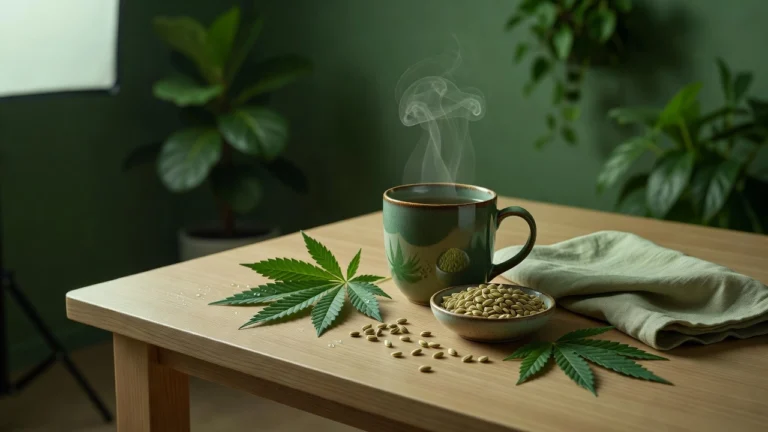
Hemp Seed Tea Benefits for Respiratory and Congestion Relief
Breathing should be effortless, yet millions of people struggle daily with congestion, inflammation, and respiratory
Have you ever found yourself staring at a tea aisle, completely overwhelmed by the endless options? If you’ve been curious about cutting back on caffeine but still want something warm, flavorful, and satisfying in your mug, you might have already spotted an intriguing option on the shelf: rooibos tea.
Pronounced “ROY-boss,” this vibrant reddish-brown herbal drink has been winning over tea lovers around the world, and for good reason. Originally from South Africa, rooibos tea is naturally caffeine-free, packed with antioxidants, and surprisingly versatile. Whether you enjoy it plain, with milk, or even iced, there’s a good chance it could become your new favorite daily ritual.
But what exactly is it, and why are so many people making the switch? In this post, we’re breaking it all down in a simple, beginner-friendly way. You’ll learn what rooibos tea actually is, why so many people have fallen in love with it, and how it fits perfectly into a caffeine-free lifestyle. Let’s dive in!
If you’ve never tried rooibos before, you’re in for a pleasant surprise. This remarkable herbal tea has a fascinating story behind it, starting with where it actually comes from.
Rooibos is made from Aspalathus linearis, a low-growing shrub found exclusively in the Cederberg mountain region of South Africa’s Western Cape. What makes it truly special is that it simply cannot be grown anywhere else in the world. Attempts to cultivate it on foreign soil have consistently failed, making rooibos one of nature’s most genuinely unique botanical ingredients. According to People and Plants International, the South African rooibos industry trades up to 15,000 tons per year, employing thousands of people and forming a vital part of the region’s agricultural heritage.
The name itself tells you a lot. “Rooibos” is the Afrikaans word for “red bush,” which perfectly describes what happens during production. The harvested needle-like leaves are bruised and left to oxidise, developing that distinctive rust-red colour and naturally sweet, earthy warmth the tea is loved for. Skip that oxidation step and you get green rooibos instead, a lighter, grassier alternative that skips fermentation entirely. Both are wonderful, though red rooibos remains by far the most popular, commanding 58.4% of the global product type market share.
One of the biggest reasons people fall for rooibos is its caffeine-free nature. Unlike black or green tea, rooibos contains no caffeine and very low levels of tannins, which means no bitter aftertaste and no unwanted late-night buzz. It brews into a beautifully smooth, amber-red cup with a mildly sweet, slightly nutty, and gently floral flavour. It is genuinely approachable for all kinds of drinkers, whether you are curious about herbal teas for the first time or actively looking to cut back on caffeinated drinks.
Rooibos has a remarkably specific origin story. Every single cup of genuine rooibos tea can be traced back to one place: the Cederberg region of South Africa’s Western Cape. This rugged, mountainous landscape sits roughly 200 kilometres north of Cape Town, and it possesses a combination of sandy, acidic soils, high altitude, and a semi-arid Mediterranean climate that simply cannot be found anywhere else on Earth. Farmers have tried growing the Aspalathus linearis plant in other parts of the world, and it just doesn’t work. The terroir, to borrow a phrase from the wine world, is completely irreplaceable.
Long before rooibos became a global wellness staple, indigenous San and Khoi communities in the Cederberg were already harvesting and using the plant for its soothing properties. This knowledge was passed down through generations, representing centuries of lived experience with the plant, well before commercial production began in the early twentieth century. It’s a heritage worth acknowledging every time you brew a cup.
That heritage is now legally protected. Rooibos holds protected geographical indication status, recognised by the European Commission, meaning only tea grown in the designated South African region can legally carry the rooibos name. Think of it like Scotch whisky or Champagne; the name belongs to the place.
And the world has noticed. The global rooibos market was valued at approximately $3.2 billion in 2025 and is projected to reach $5.1 billion by 2034, driven largely by health-conscious consumers seeking caffeine-free alternatives. Europe leads the way, accounting for 34.7% of global rooibos revenue, making the UK and its neighbours the most important commercial destination for South African producers worldwide.
Now that you know where rooibos comes from, it’s worth exploring what actually makes it so enjoyable to drink. The flavour is one of the first things people notice, and it tends to be a very pleasant surprise.
Red rooibos has a naturally sweet, warm, and slightly earthy taste with gentle notes of vanilla and a subtle hint of nuttiness. It is comforting and smooth rather than sharp or astringent, which makes it immediately accessible even if you are entirely new to herbal teas. Unlike black tea, there is no bitterness to navigate, no edge to soften. It simply tastes mellow and inviting from the first sip.
A big part of the reason for that smoothness is rooibos’s low tannin content. Tannins are the compounds responsible for that dry, slightly bitter sensation you sometimes get when you leave a black tea bag in the cup for too long. Because rooibos contains very little of them, it stays smooth and sweet even if you forget about it on the kitchen counter. It is genuinely forgiving to brew, which is great news for beginners.
If you want something a little lighter, green rooibos is worth knowing about. It is the unoxidised version of the same plant and offers a more delicate, subtly grassy flavour. Some people loosely compare it to a mild green tea, though it remains completely caffeine-free, just like its red counterpart.
Rooibos also happens to be a wonderful base for botanical blends. Its naturally sweet and gentle character allows it to pair beautifully with ingredients like mint, lavender, rose petals, and warming spices, which is precisely why it has become such a popular foundation for flavoured herbal teas.
Finally, rooibos is wonderfully versatile when it comes to how and when you enjoy it. It works hot or cold, with or without milk, and at any time of day. Its complete absence of caffeine makes it particularly lovely in the evening when you want something warm and comforting without the risk of lying awake at midnight.
Part of rooibos tea’s growing appeal is what’s actually happening inside the cup. Beyond the lovely taste and the warming ritual of brewing a pot, there are some genuinely interesting properties that have caught the attention of researchers and health-conscious tea drinkers alike.
Unique antioxidants you won’t find anywhere else
Rooibos contains polyphenol antioxidants called aspalathin and nothofagin, and these are quite special. They are found exclusively in the Aspalathus linearis plant, which means no other tea in the world contains them. Scientists have been studying these compounds with real interest, and while research is still ongoing, the early findings on their potential role in supporting general wellbeing are encouraging. It is worth being clear that rooibos is not a medicine and should not replace professional medical advice, but as part of a balanced lifestyle, these unique antioxidants are certainly worth knowing about.
Completely caffeine-free, all day long
One of the most practical benefits of rooibos is that it contains absolutely no caffeine. This makes it genuinely suitable at any time of day, whether that is a calming evening brew before bed or a morning cup for anyone managing caffeine sensitivity. Unlike black or green tea, rooibos will not interfere with your sleep or leave you feeling jittery. That flexibility is a big part of why so many people are making the switch.
Gentler on iron absorption
Here is something that surprises many people. Conventional teas contain tannins, which can bind to iron in the gut and reduce how well your body absorbs it. Rooibos is naturally low in tannins, so it does not present that same concern. For anyone on a plant-based diet or keeping an eye on their iron levels, this makes rooibos a noticeably more compatible everyday drink.
A modest mineral contribution
Rooibos also contains trace amounts of calcium, potassium, magnesium, and zinc. The quantities per cup are modest, so it is best thought of as a pleasant complement to a varied, balanced diet rather than a nutritional supplement. Every little counts, though, and there is something quietly reassuring about knowing your afternoon brew is contributing something positive.
Something genuinely interesting is happening in the world of tea. Across the UK and beyond, more people are quietly stepping away from their morning coffee or afternoon builder’s brew and reaching instead for something softer, calmer, and altogether more gentle on the body. This is not a fleeting wellness trend; it is a well-documented and accelerating shift that market researchers have been tracking consistently across the 2024 to 2035 window.
The numbers tell a compelling story. The global herbal tea market is valued at $4.2 billion in 2026 and is forecast to reach $5.8 billion by 2036, growing at a steady 3.3% annually. That kind of sustained growth signals genuine mainstream adoption rather than a passing fad. Within that broader picture, rooibos is actually outpacing the category as a whole, projected to grow at a CAGR of 7.6% from 2026 to 2033, more than double the overall herbal tea rate. Consumers are clearly seeking it out with purpose.
So what is driving people to make the switch? The motivations are deeply practical. Better sleep, reduced feelings of anxiety, greater digestive comfort, and a broader desire to make more intentional choices throughout the day all feature prominently. A caffeine-free brew can be enjoyed morning, afternoon, or evening without any concern about disrupted sleep, which is a genuinely useful quality in a busy life. Research into rooibos specifically consistently highlights its antioxidant properties and low tannin content as part of its appeal to health-conscious drinkers.
Here in the UK, there is also a growing appreciation for premium botanical teas as a form of everyday self-care and as thoughtful gifts. Artisan blends crafted with natural ingredients have carved out a special place in British homes, creating new occasions for caffeine-free drinking well beyond the traditional afternoon cuppa.
The good news is that rooibos is one of the most forgiving teas you can brew. Whether you’re brand new to herbal teas or simply want to get the most out of your cup, these simple steps will help you brew it beautifully every time.
1. Use freshly boiled water Unlike delicate green teas, which need cooler water to avoid turning bitter, rooibos is a robust herbal infusion that welcomes a full boil. Aim for water at around 95 to 100 degrees Celsius, which means your standard kettle is perfect. No thermometers needed, just boil and pour.
2. Steep for 5 to 7 minutes Give your rooibos enough time to fully bloom. Thanks to its naturally low tannin content, rooibos won’t turn sharp or astringent if you leave it a minute or two longer, which is great news for anyone who forgets about their cup. Black tea can turn unpleasantly bitter when oversteeped; rooibos simply won’t.
3. Choose your format: loose leaf or tea bag Loose leaf rooibos gives you a fuller, more aromatic cup and lets you adjust the strength to suit your taste. Use roughly one to two teaspoons per 200ml of water as a starting point. Tea bags are a perfectly convenient option too, and they account for 58% of the herbal tea packaging market, making them the most popular everyday choice.
4. Try cold brew for something refreshing Rooibos makes a wonderfully refreshing cold brew. Simply add your loose leaf or tea bag to a jug of cold filtered water and leave it in the fridge for 6 to 8 hours. The result is a smooth, naturally sweet iced tea that needs no added sugar whatsoever.
5. Add a little something extra A slice of orange, a cinnamon stick, or a few sprigs of fresh mint all pair beautifully with rooibos’s natural warmth and sweetness. These simple additions create a personalised, café-style drink at home without any fuss or fancy equipment.
If you love rooibos tea, it’s worth knowing that the story behind your cup is becoming increasingly complex, and quite thought-provoking.
The 2026 rooibos harvest is facing a serious challenge. Industry estimates put the year’s crop at approximately 13,000 tons, well short of global demand of around 19,600 tons. That’s a shortfall of over 6,000 tons, driven primarily by severe drought conditions across South Africa’s Western Cape growing region, where expected summer rainfall largely failed to arrive. Some producers have revised their forecasts downward by as much as 40%, placing upward pressure on pricing across the supply chain. This isn’t simply a one-off bad season either; output has been declining steadily from around 17,000 tons in 2023, suggesting the pressures of climate variability are becoming structural rather than occasional.
Rooibos is unusual in that it can only legally be grown within a specific 20,000 sq km region of the Cederberg mountains. That geographical protection is part of what makes it special, but it also makes the crop uniquely vulnerable. When one region experiences drought, there is no alternative growing area to fall back on. In response, producers are accelerating investment in sustainable farming, water conservation, organic cultivation, and fair trade certification, all of which are increasingly influencing how ethically minded consumers choose their tea.
This is a useful moment to consider the broader picture of herbal teas. Ingredients grown closer to home, such as the British-cultivated hemp seed, mint, lavender, and rose petals used in Leonard’s blends at Rowchester Farm, are not exposed to the same geographic and climate vulnerabilities as a single-origin South African crop. For tea drinkers who care about provenance, traceability, and environmental impact, knowing where ingredients come from and how they are grown is becoming just as important as the flavour itself. Supporting locally grown botanicals is a small but meaningful way to enjoy great tea while reducing reliance on supply chains stretched thin by a changing climate.
Something lovely is happening in the world of herbal tea gifting. More and more people are moving away from the standard supermarket multipack and choosing something with a bit more thought, craft, and story behind it. This shift, often called premiumisation, is one of the most consistent trends across the herbal tea market right now, with shoppers genuinely willing to spend a little more on something that feels special, whether for themselves or someone they care about.
Rooibos sits beautifully at the heart of this trend. Its naturally distinctive character, its wellness associations, and its caffeine-free credentials make it a genuinely compelling gift choice, particularly here in Europe, which accounts for 34.7% of global rooibos revenue. European tea drinkers have long appreciated quality and provenance, and rooibos fits neatly into that tradition. It’s something a little different, deeply enjoyable, and thoughtful without being complicated.
What really elevates a tea gift, though, is the story behind it. Small-batch and farm-origin teas are gaining real traction in this space, because the narrative of who made something, where, and how carries genuine meaning. A tea with roots in a specific place, made by real people with real care, simply feels more worth giving than something produced at industrial scale.
That is where artisan botanical tea brands have a clear and meaningful advantage. The personal provenance, ingredient transparency, and craftsmanship they offer is something mass-market producers genuinely cannot replicate at scale. Here at Leonard’s Herbal Hemp Tea, crafted at Rowchester Farm in the Scottish Borders, that sense of place and purpose is woven into every blend we make.
Whether you are drawn to premium rooibos or a carefully crafted British botanical blend, choosing a tea made with genuine care for its ingredients and origins adds real warmth to the act of giving.
Rooibos may be the most familiar name in caffeine-free herbal tea, but it is far from the whole story. The botanical world is wonderfully diverse, and a growing number of plant-based blends share everything that makes rooibos so appealing: no caffeine, no artificial additives, and a genuine connection to natural ingredients. For anyone beginning to explore herbal teas, this is genuinely exciting territory.
Many of the most beloved botanical ingredients have deep roots in British and European herbal traditions. Mint has been valued for centuries for its refreshing, digestive qualities. Lavender brings a gentle floral calm that has long been associated with relaxation and wellbeing. Rose petals add a delicate, aromatic sweetness with a history stretching back through cottage gardens and country kitchens alike. Each of these ingredients offers its own distinct flavour profile and soothing character, entirely free from caffeine or anything artificial.
One ingredient that deserves a little more attention is British-grown hemp seed. Used purely as a botanical ingredient, it contains no CBD or THC whatsoever. What it does bring is a smooth, slightly nutty warmth that sits beautifully alongside floral and herbal notes, adding depth without overpowering the blend.
At Leonard’s Herbal Hemp Tea, our signature blend brings all of this together. Crafted at Rowchester Farm in the Scottish Borders, it combines British-grown hemp seed with mint, lavender, and rose petals into a smooth, naturally caffeine-free infusion. Like rooibos, it is entirely botanical, completely free from artificial additives, and gentle enough to enjoy morning, afternoon, or evening.
If rooibos speaks to you because of its comforting warmth and honest ingredients, our blend offers a distinctly British alternative well worth a cup.
Rooibos is a genuinely remarkable herbal tea, and it richly deserves all the attention it has been receiving in recent years. Naturally caffeine-free, low in tannins, and packed with plant-based antioxidants, it is a drink you can comfortably enjoy at any time of day without a second thought. Its roots in South Africa’s Western Cape give it a character that is completely unique, and the growing global appetite for it reflects something meaningful: more people are choosing to drink with intention, prioritising wellness and quality over habit.
Understanding the sustainability pressures facing rooibos in 2026 is a gentle reminder of why botanical diversity matters so much. When a single-origin ingredient faces supply challenges, it naturally encourages us to appreciate and explore the wider world of herbal blends, including those grown closer to home.
Whether you are just beginning your caffeine-free journey or looking to expand an already adventurous palate, rooibos is a brilliant place to start. And there is so much more waiting beyond it.
If you are curious to explore further, we warmly invite you to discover the Leonard’s Herbal Hemp Tea range, crafted with care at Rowchester Farm in the Scottish Borders. Our botanical blends offer a genuine taste of British herbal tea at its most honest, natural, and flavourful.
Breathing should be effortless, yet millions of people struggle daily with congestion, inflammation, and respiratory

Have you ever felt bloated, sluggish, or just plain uncomfortable after a meal? You are